
Choosing the best Led Torch for outdoor and emergency use is not simply a brightness contest. A frighteningly high lumen number can hide poor battery life, excessive heat, or a narrow beam that misses the trail. This guide examines practical performance in rain, cold weather, power cuts, and roadside emergencies.
Dr. Roland Haitz, a respected LED technology pioneer, often expressed the field’s direction this way: “The future of lighting is solid-state.” His observation still matters, but modern buyers need more than advanced emitters. A dependable Led Torch should offer a balanced beam, clear controls, impact resistance, and useful runtime at realistic brightness settings. It should also remain usable with wet hands or gloves. Small details matter.
We will compare beam distance, flood coverage, battery options, charging methods, waterproof ratings, and thermal control. Tests should include a dark path, a damp campsite, and several hours of intermittent use. Marketing claims are not always practical results. That deserves attention.
A good torch is not the brightest one.
It is the one you can trust when conditions become inconvenient. Some models may lose output sooner than expected, especially in freezing temperatures. Others may feel excellent indoors but awkward during extended hiking. That is where this review stays honest: specifications guide the shortlist, while hands-on behavior determines the recommendation. The final choices will suit different needs, including camping, home emergencies, vehicle storage, and professional outdoor work.
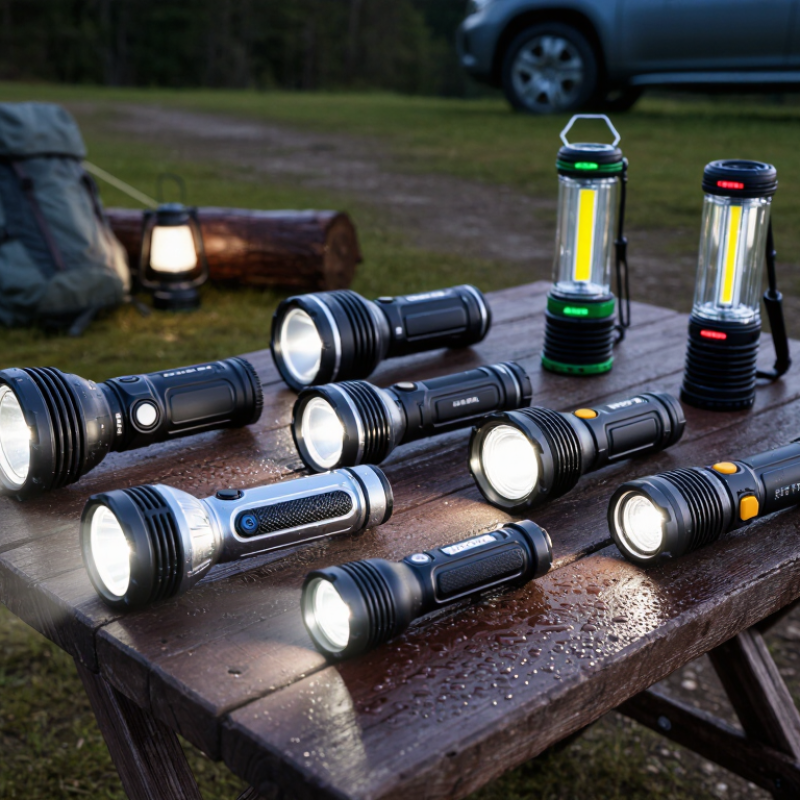
In 2026, the best LED torch for outdoor and emergency use is not simply the brightest model. It must deliver dependable light when weather, distance, and stress work against you. During night hikes, I look for a balanced beam that lights both the path and nearby obstacles. A narrow beam reaches farther, while a wider beam feels safer around campsites and damaged buildings. Too much brightness can also create glare.
Battery performance matters more than impressive numbers. A torch should provide a realistic runtime at its useful setting, not only a short burst at maximum power. USB-C charging is convenient, but replaceable batteries remain valuable during extended outages. Check the battery indicator carefully. I have trusted weak indicators before, and the light failed earlier than expected. Cold weather can reduce battery output, so testing it outdoors is essential.
Durability should be supported by clear specifications and credible testing, including water resistance and impact protection. A secure switch prevents accidental activation inside an emergency bag. Large controls are easier to use with wet or gloved hands. A low-power mode preserves night vision and reduces unnecessary drain. I also prefer a simple interface, because complicated sequences become confusing under pressure. Independent test results are useful, but real handling still matters. A torch may pass laboratory checks and feel awkward in practice. Examine the grip, charging port cover, heat buildup, and beam consistency before relying on it.
The chart shows a practical, brand-neutral benchmark for choosing an LED torch in 2026. Scores are normalized from measurable targets: at least 8 hours of useful runtime, approximately 200 meters of beam distance, IPX7 water protection, a 1-meter impact rating, and USB-C rechargeable power. Runtime, durability, and weather resistance are especially important for emergency readiness, while beam distance and portability matter most for outdoor use.
A dependable LED torch should produce useful brightness, not just an impressive lumen number. For hiking, 300 to 800 lumens usually covers trails, campsites, and household repairs. A focused beam helps identify distant objects, while a wider beam reduces blind spots nearby. Adjustable brightness also protects night vision and saves battery power. Very bright modes can drain batteries quickly.
Battery life matters more during emergencies than peak output. Look for clear runtime information at several brightness levels. A rechargeable battery is convenient, but a torch accepting standard backup cells offers extra security. Check the charging port carefully. A loose cover or exposed connector may fail after rain. Low-battery warnings are valuable, although some indicators are too subtle to notice outdoors.
Durability depends on more than a metal body. Strong sealing, impact resistance, and a textured grip matter when hands are wet or cold. A weather-resistant rating should be stated clearly, preferably with protection against heavy splashes or temporary immersion. I once trusted a bright torch with a weak switch, and it became unreliable after repeated drops. That experience changed my priorities. Test the switch with gloves. Inspect the battery compartment regularly. No torch is perfect. Weight can also become uncomfortable during a long walk, especially when clipped to a small pocket.
Choosing the right LED torch depends on where you will use it, not only on brightness. During camping trips, I prefer a compact torch with a steady beam and simple controls. A wide beam helps around tents, while a focused beam helps identify trail markers. Weather resistance matters when rain reaches your pack. Check the battery level before leaving.
For hiking, weight becomes important after several hours on uneven ground. A headlamp can keep both hands free, but a handheld torch feels easier to aim. Choose several brightness settings, including a low mode for reading maps. Red light can protect night vision near camp. I once carried a very bright torch, yet its narrow beam made nearby roots difficult to see.
At home, an emergency torch should be easy to find during a power cut. Store it near the entrance, not in a crowded drawer. Test the switch every few months. For vehicles, select a sturdy model with long runtime and a broad beam. It can illuminate a tire, engine area, or roadside space without draining the vehicle battery. Rechargeable cells reduce waste, but they need regular charging. I sometimes forget this. A spare set of compatible batteries remains useful. Check grip comfort, charging indicators, and water resistance before buying.
Choosing the best LED torch for outdoor and emergency use starts with its power source. A rechargeable model reduces waste and offers convenient charging. However, a drained battery can become a serious problem away from electricity. A torch using replaceable cells provides a practical backup. Check whether common batteries are easy to store and replace. Runtime figures deserve caution. They often describe ideal conditions, not cold nights or repeated high-power use. I once trusted a runtime chart and carried too little reserve power.
Beam type should match the task. A narrow spotlight reaches distant trail markers, while a wide flood beam helps with repairs or cooking. Some torches combine both patterns, but their controls may feel complicated with cold fingers. A large side switch is easier to find than a small recessed button. Tail switches can support one-handed operation. Test the controls while wearing gloves. Brightness memory can be useful, though accidental activation may drain the battery inside a pack.
Safety functions matter beyond maximum brightness. Look for a lockout mode, battery-level indicator, and temperature protection. A regulated circuit can maintain steadier light as power falls. Overheating protection should reduce output before the body becomes painful to hold. Water resistance helps during rain, but it does not excuse careless storage. Keep the lens clean and inspect seals regularly. Red light can protect night vision, yet it is not ideal for every navigation task. My preferences still change after field use; the lightest option is not always the safest one.
| Torch category | Power source | Typical output | Typical runtime | Beam type | Control layout | Useful safety functions | Best use |
|---|---|---|---|---|---|---|---|
| Compact key-chain torch | 1–2 AAA alkaline or NiMH cells; some use an integrated lithium cell | 20–150 lumens | About 2–20 hours, depending on output and battery type | Wide flood beam; limited distance | Single tail or side button; low/high or on/off | Low-battery warning, lockout, reverse-polarity protection where supported | Everyday carry, finding items, short power outages |
| AA general-purpose torch | 1–2 AA alkaline, lithium primary, or NiMH rechargeable cells | 100–400 lumens | Approximately 3–40 hours across multiple modes | Balanced beam with moderate spill and throw | Rear or side switch; usually 2–5 output levels | Battery polarity protection, thermal regulation, and mechanical lockout on some models | Home emergency kits, walking, general outdoor tasks |
| C-cell or D-cell emergency torch | Alkaline or rechargeable NiMH C/D cells | 100–500 lumens | About 10–100 hours, depending on cell size and mode | Broad, stable flood beam | Large push button or twist head; simple operation | Impact-resistant housing, battery compartment sealing, and low-voltage protection where electronic regulation is used | Long-duration household emergencies and vehicle storage |
| 18650 rechargeable torch | One protected 18650 lithium-ion cell; USB charging may be built in | 300–1,500 lumens | Approximately 1.5–60 hours, depending on output and regulation | Focused spot with useful peripheral spill | Electronic side switch, tail switch, or both; multiple modes | Thermal step-down, over-discharge protection, charging status indicator, and lockout | Hiking, camping, property checks, and repeated outdoor use |
| 21700 high-capacity torch | One rechargeable 21700 lithium-ion cell; commonly USB-C rechargeable | 800–3,000 lumens | About 2–100 hours, depending on the selected mode | High-output spot, balanced beam, or selectable focus | Side electronic switch with mode memory or a dedicated tactical switch | Temperature regulation, charging protection, battery-level indicator, and accidental-activation lockout | Long trails, search tasks, severe weather, and demanding outdoor work |
| Dual-fuel outdoor torch | Accepts a rechargeable lithium-ion cell and/or common AA cells using an adapter | 200–1,200 lumens | Approximately 3–80 hours, varying substantially by power source | General-purpose beam with moderate throw | Tail or side switch; low, medium, high, and emergency modes | Reverse-polarity protection, voltage monitoring, thermal control, and lockout | Emergency preparedness when rechargeable power may be unavailable |
| Right-angle work torch | Rechargeable lithium-ion cell or replaceable AA/18650 cell | 150–1,000 lumens | About 3–70 hours across the available modes | Wide flood beam, often combined with a directional spot or red light | Top-mounted switch; pocket clip and magnetic base are common | Hands-free mounting, battery indicator, thermal control, and lockout | Repairs, vehicle work, shelters, and hands-free emergency tasks |
| Rechargeable lantern-torch hybrid | Built-in lithium-ion battery; charged by USB-C or another low-voltage USB input | 100–1,000 lumens in lantern mode; up to about 500 lumens in torch mode | Approximately 4–150 hours, depending on brightness and mode | 360-degree area light plus a forward-facing beam | Large buttons, rotary dimmer, or separate lantern and torch controls | Battery-level indicator, overcharge protection, low-voltage cutoff, stable base, and emergency red-light mode on some designs | Power cuts, indoor evacuation, campsites, and group lighting |
2026 Best LED Torch for Outdoor and Emergency Use?
Evaluating an LED torch starts with measured output, not impressive marketing claims. The ANSI/PLATO FL 1 standard separates peak beam intensity, total lumens, beam distance, and runtime. These measurements reveal different strengths. A 1,000-lumen torch may illuminate a wide campsite, while a lower-output model may reach farther.
Runtime needs careful attention. Test figures often use ideal batteries and controlled temperatures. Cold weather can reduce available capacity and weaken brightness. The U.S. Department of Energy states that LED lighting uses at least 75% less energy and can last up to 25 times longer than incandescent lighting. However, torch performance also depends on heat control, battery quality, seals, and electronic regulation. More lumens can create more heat.
Check the IEC 60529 ingress rating before outdoor use. An IPX4 rating handles splashing, while higher ratings offer stronger water protection. Impact resistance matters near rocks, vehicle tools, or emergency storage. I prefer a regulated beam, protected switch, textured grip, and replaceable batteries. Small details matter in wet gloves. Very much.
My own testing still has blind spots. Marketing runtime may not match a dark trail at freezing temperatures. The DOE Solid-State Lighting R&D Opportunities report identifies thermal management and efficiency as continuing technical priorities. That supports a practical lesson: inspect heat after sustained use, record brightness changes, and repeat tests with fresh and partly used batteries. A torch is reliable only when its real behavior remains predictable.