Top AC/DC Solar Surface Pumps from China at Canton Fair 2026?
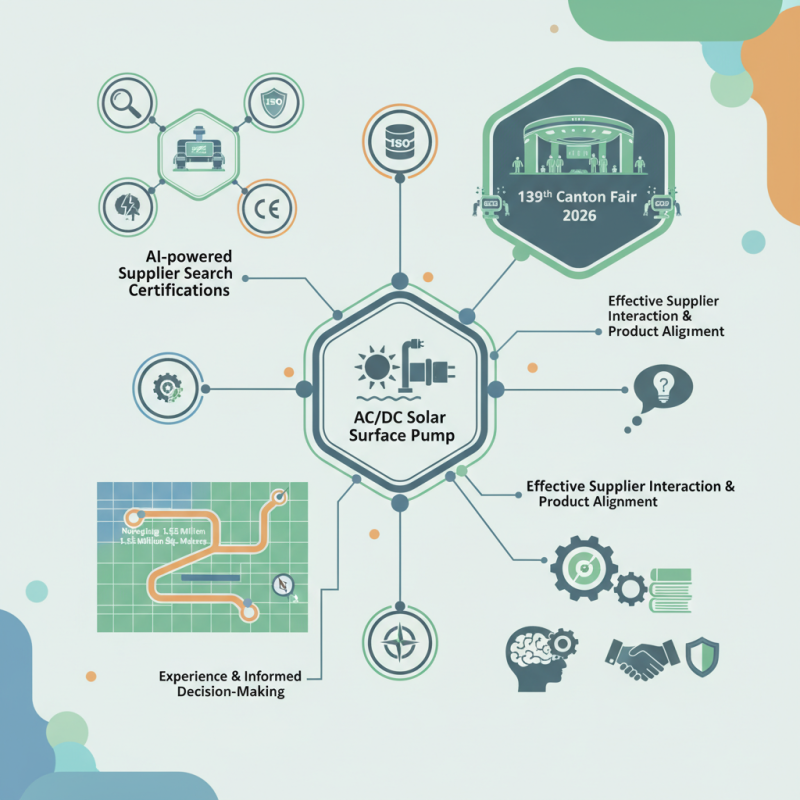
The 139th Canton Fair in 2026 will showcase innovative products, including the AC/DC Solar Surface Pump. This event is crucial for buyers seeking advanced manufacturing solutions. From April 15 to May 5, the fair's three phases will highlight various sectors, with a focus on advanced manufacturing and electronics.
The introduction of AI technology will transform the buyer experience. AI will enable quick searches for suppliers with specific qualifications, such as ISO and CE certifications. This feature aims to enhance efficiency within the vast exhibition area, which spans 1.55 million square meters. However, navigating such a large space can still be challenging.
Effective interactions with suppliers for the AC/DC Solar Surface Pump may require careful planning. Not every supplier will meet expectations. Buyers must ensure the products align with their needs. Reflection on previous experience can enhance decision-making. Attending the Canton Fair offers opportunities, yet one should remain cautious and informed.
Overview of AC/DC Solar Surface Pumps for Agriculture and Irrigation
AC/DC solar surface pumps are gaining traction in agriculture. These pumps utilize solar energy to efficiently irrigate crops. As global warming continues, sustainable solutions are vital for farming. Recent reports indicate that solar pump usage has increased by 35% in the last five years.
Efficiency is a key factor in their adoption. A typical solar surface pump can deliver up to 50% more water than traditional systems. This efficiency not only conserves resources but also lowers operational costs. Farmers often report significant savings on electricity bills. However, initial investment may deter some buyers.
While the technology is promising, challenges remain. Reliability can vary due to weather conditions. Some systems struggle during cloudy days. Maintenance can also be tricky, as parts might require frequent replacements. Educating users about these nuances is essential for maximizing performance. Thus, further research and development in this area could enhance the sustainability of agricultural practices.
Overview of AC/DC Solar Surface Pumps for Agriculture and Irrigation
Key Features of Top Solar Surface Pumps Presented at Canton Fair 2026
At the Canton Fair 2026, a variety of solar surface pumps are showcased. These pumps are designed for various applications, from agriculture to aquaculture. They harness the power of the sun, making them eco-friendly and efficient.
The top solar surface pumps flaunt impressive features. Most models offer high efficiency and robust construction. Many are equipped with smart controllers for optimal performance. These controllers adjust the pump's operations based on sunlight availability. Some designs are lightweight, ensuring easy installation and mobility. Durability is emphasized, with materials resistant to corrosion and harsh weather.
However, not all designs are perfect. Some users report challenges with water flow consistency. A few models may struggle during cloudy days or low sunlight. These factors impact overall reliability. Pump maintenance can also be complex for certain designs. Users should carefully evaluate their needs before choosing a pump.
Comparison of Leading Brands and Models in the Solar Pump Market
At the Canton Fair 2026, AC/DC solar surface pumps captured significant interest. These pumps are designed to harness solar energy effectively. Many brands showcased innovative features and efficiency improvements. The competition is fierce, with each brand trying to outdo the others.
When comparing various models, consider the flow rate and power consumption. Some pumps provide impressive flow rates, yet may consume more energy than expected. It's essential to balance these factors for optimal performance. Pay attention to the materials used in pump construction as well. Durability matters in outdoor settings.
Tips: Always check customer reviews on performance and reliability. A pump may look great on paper but fail in real-world conditions. Think critically about your needs. Some models may not be suitable for every application. Make sure to consider your specific requirements before making a decision.
Sustainability and Efficiency of Solar Surface Pumps in Modern Applications
The rise of solar surface pumps has transformed many industries. These pumps utilize renewable energy, making them a sustainable choice for water management. Their efficiency is evident in agricultural applications, where they power irrigation systems. Reduced reliance on fossil fuels is crucial for green initiatives.
Many users report mixed results with solar surface pumps. Inconsistent sunlight can affect performance. Efficiency drops on cloudy days, which can impact water supply. Users often need backup systems. Addressing these issues is essential for wider adoption. It's vital to enhance the battery life and storage options available.
The environmental benefits are undeniable. Solar surface pumps lower carbon emissions and promote eco-friendly practices. As farmers and businesses seek sustainable solutions, these pumps could play a larger role. Investment in technology is critical for innovation and improvement. Balancing efficiency with real-world challenges is necessary as we move forward.
Top AC/DC Solar Surface Pumps from China at Canton Fair 2026
| Model | Power Source | Flow Rate (L/min) | Head Height (m) | Efficiency (%) | Applications |
| SP-1000 | Solar | 150 | 30 | 85 | Irrigation, Pool Filling |
| DP-200 | AC | 200 | 25 | 90 | Industrial, Agriculture |
| SP-500 | Solar | 120 | 35 | 82 | Garden, Farming |
| DC-300 | DC | 180 | 40 | 88 | Water Supply, Livestock |
| AC-400 | AC | 220 | 20 | 92 | Draining, Clean Water |
Future Trends in Solar Pump Technology Highlighted at the Canton Fair 2026
The Canton Fair 2026 showcased an impressive lineup of solar pump technology. Attendees observed various innovations aimed at enhancing efficiency and sustainability. The focus was on AC/DC solar surface pumps, which use minimal energy while delivering maximum output. Many companies highlighted their achievements in harnessing renewable energy.
One notable trend was the integration of smart technology into these pumps. This allows for remote monitoring and better control over water distribution. However, some manufacturers faced challenges in user adaptation. Customers sometimes struggle with advanced features. Simplicity is still key for many users.
Another emerging theme was the move towards eco-friendly materials. Manufacturers are exploring sustainable options for housing and components. Yet, there are still issues with durability and cost-effectiveness. Balancing eco-friendliness with performance remains a concern. Ultimately, these discussions at the fair revealed both progress and areas for improvement in solar pump technology.