What are Ball Bearings and How Do They Work?
Ball Bearings are essential components in various machines and devices. They reduce friction and enable smooth motion. Imagine a bicycle wheel. The ball bearings inside the hub allow the wheel to spin effortlessly. Without them, our daily activities would be much harder.
The design of a ball bearing is quite simple, yet effective. It consists of small balls housed between two rings. These rings, known as races, help the balls roll smoothly. The materials used are often steel or ceramic, ensuring durability. However, not all ball bearings perform perfectly. Some may wear down faster under heavy load. This can lead to failure, requiring regular maintenance.
Understanding how ball bearings work can help optimize their performance. Observing your machinery for unusual sounds can be a good start. Regular checks can prolong their life. The ball bearing is a small but vital part, impacting overall efficiency. Lacking attention, issues can arise, causing delays or even failures in operations. Better insights into ball bearings can lead to smarter choices in engineering and design.
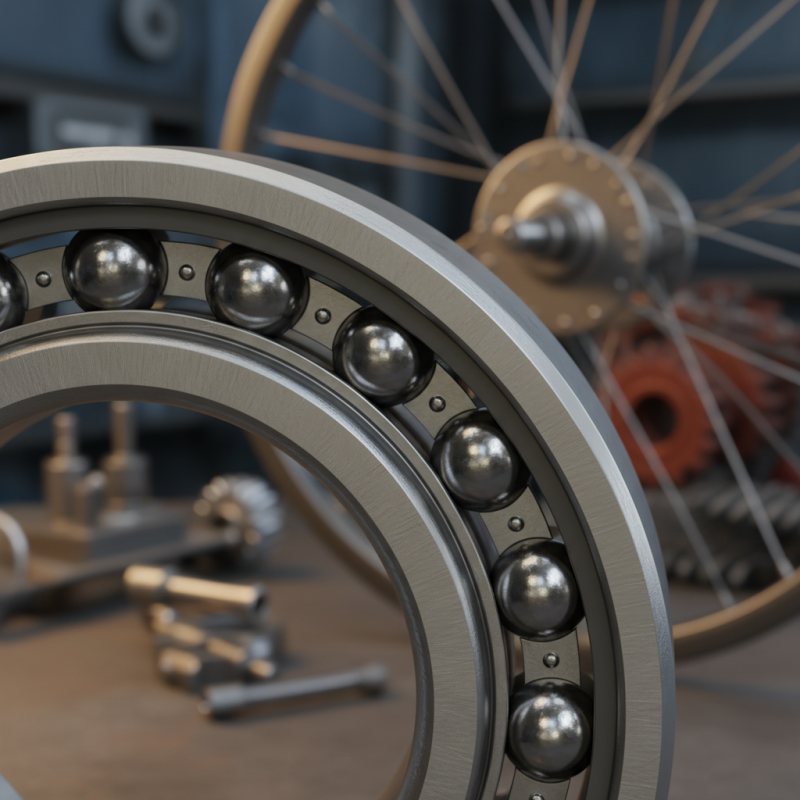
What Are Ball Bearings? A Comprehensive Overview
Ball bearings are crucial mechanical components found in various applications, from bicycles to heavy machinery. They reduce friction between moving parts, allowing for smoother operation. Typically made of steel or ceramic, ball bearings consist of balls housed within an outer and inner ring. This simple design plays a significant role in numerous devices.
In many machines, the longevity of ball bearings impacts overall performance. When they wear out, they can cause significant problems. Small imperfections may lead to noise or reduced efficiency. Users often overlook the importance of regular maintenance. A bit of vigilance can extend the life of these components. Inspecting for signs of wear or corrosion is vital. It’s easy to underestimate how critical these small parts can be. Yet, their failure can halt entire operations.
Understanding ball bearings involves recognizing their importance and fragility. They operate quietly, almost invisibly, until something goes wrong. Reflecting on our reliance on them is essential. A simple check could save time and money in the long run. Embracing this knowledge can lead to better mechanical upkeep.
What are Ball Bearings and How Do They Work?
| Bearing Type | Material | Load Capacity (kg) | Max RPM | Application |
| Deep Groove Ball Bearing | Chrome Steel | 25 | 3000 | Electric motors, conveyors |
| Angular Contact Ball Bearing | Stainless Steel | 50 | 2500 | Machine tools, robotics |
| Self-Aligning Ball Bearing | Brass | 40 | 1500 | Agricultural machinery |
| Thrust Ball Bearing | Carbon Steel | 30 | 1200 | Automotive applications |
| Miniature Ball Bearing | Stainless Steel | 10 | 5000 | Hobbyist models, drones |
The History and Development of Ball Bearings
Ball bearings have a rich history that reflects the evolution of engineering and manufacturing. The earliest known design appears in Leonardo da Vinci's sketches from the 15th century. However, it wasn't until the 19th century that they gained significant recognition. In 1794, Philip Vaughan patented the first ball-bearing design. This innovation provided smoother rotation in wheels and reduced friction. The industrial revolution accelerated their use, especially in machinery and automobiles.
By the early 20th century, advancements in materials greatly improved ball bearings. Steel became the standard, providing strength and durability. Research from the International Bearing Industry Association noted that the global market for ball bearings was valued at approximately $30 billion in 2021, showing steady growth. Innovations continue, including ceramic and hybrid bearings, which offer enhanced performance but also have high costs.
Challenges remain in ball bearing manufacturing. Precision is essential, yet the production process can introduce defects. Poorly manufactured bearings can lead to equipment failure. Industry experts emphasize the importance of rigorous quality control to ensure reliability. The journey of ball bearings illustrates a blend of technological advancement and the need for continuous improvement.
Understanding the Components of Ball Bearings
Ball bearings are essential components in many machines and vehicles. Understanding their structure is crucial for effective maintenance. A ball bearing consists of an outer race, inner race, and spherical balls. The races provide a smooth surface for the balls to roll. This design reduces friction between moving parts, which is crucial for efficiency.
According to a report by MarketsandMarkets, the global ball bearing market is projected to reach $70 billion by 2026. This growth emphasizes the importance of quality bearings in industrial applications. The material used in the construction greatly affects performance. Bearings made from high-carbon chromium steel offer durability and reduced wear. However, improper lubrication can lead to premature failure.
The arrangement of balls in the races allows for load distribution. Different configurations, like deep groove or angular contact, cater to various needs. Incorrect selection may result in suboptimal performance. Engineers must consider load capacities and operational speeds. Regular inspections help identify any issues early. This proactive approach can prevent costly downtime and enhance productivity.
How Ball Bearings Function: Physics Behind the Mechanics
Ball bearings are essential components in various mechanical systems. They reduce friction between moving parts, enhancing efficiency and lifespan. The physics behind their function relies on the rolling motion of spheres, which minimizes the contact area. This design reduces friction compared to sliding motion. According to a report by the American Society of Mechanical Engineers, the energy loss due to friction can be reduced by up to 90% with effective bearing designs.
The distribution of load in ball bearings is crucial. They carry heavy loads while maintaining smooth movement. The angle at which the load is applied impacts performance. Misalignment or uneven loading can lead to premature failure. A study from the International Journal of Mechanical Sciences highlights that even minor deviations can drastically reduce reliability.
Temperature plays a significant role as well. High temperatures can cause lubricants to break down. This can lead to increased wear and tear. Research published in the Journal of Tribology indicates that optimal operating temperatures can extend the life of bearings significantly. However, maintaining these temperatures requires careful monitoring and sometimes complex cooling solutions.
Common Applications of Ball Bearings in Various Industries
Ball bearings are crucial components in many industries. They reduce friction between moving parts. This makes machinery more efficient. Their design allows them to support loads in different directions. They are found in electric motors, bicycles, and automotive applications.
In manufacturing, ball bearings are vital for conveyor systems. They ensure smooth operation, which can speed up production. In the aerospace industry, they are critical for engines and landing gear.
Yet, maintaining these bearings is essential. A lack of lubrication can lead to failure. Regular checks can prevent costly downtimes.
Tip: Always inspect ball bearings for wear and tear. Catching issues early saves time. Also, consider the operating environment. Dust or moisture can deteriorate their performance. Keep them clean and well-lubricated for longevity.