
Global warehouse operations are entering 2026 under pressure from labor shortages, faster delivery expectations, and tighter energy budgets. Electric Pallet Jacks are becoming practical tools for short-distance movement, not merely entry-level warehouse equipment. A typical unit now handles 2,000 to 5,500 pounds, depending on configuration and market standards. Some models include lithium-ion batteries, regenerative braking, onboard diagnostics, and adjustable travel speeds.
Industry research supports this shift. The MHI Annual Industry Report identifies labor availability and warehouse productivity as continuing technology priorities for supply-chain leaders. Market analyses from Grand View Research and MarketsandMarkets also project steady growth across electric material-handling equipment. However, their market definitions differ. That matters. Buyers should not compare headline growth rates without checking whether pallet trucks, stackers, and forklifts are grouped together.
This guide examines the 2026 best Electric Pallet Jacks for global buyers through practical purchasing criteria. These include rated capacity, fork dimensions, battery chemistry, charging time, turning radius, operator controls, spare-parts access, and local service capability. A compact walkie model may suit a grocery backroom, while a ride-on pallet jack may perform better across a large distribution center. Noise levels matter near retail customers. Battery performance matters in cold storage.
Compliance also requires careful review. Buyers should verify applicable requirements, including ISO 3691-5, regional electrical rules, charger certifications, and workplace safety provisions. Specifications can look impressive on paper. Real warehouse floors are less forgiving. Uneven concrete, overloaded pallets, and weak after-sales support often expose the difference between a low price and dependable value.
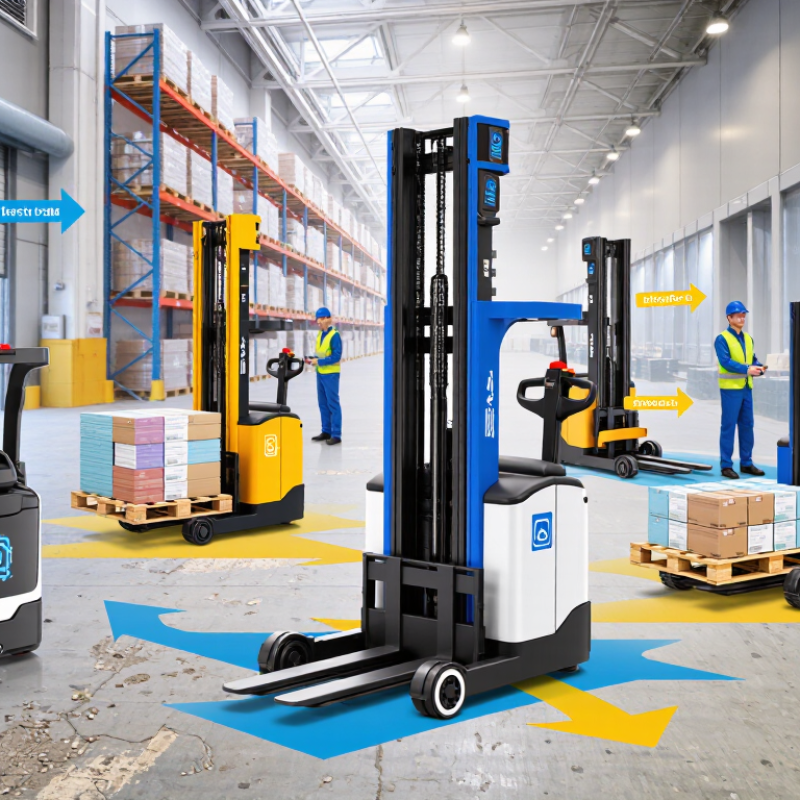
An electric pallet jack is a powered material-handling machine for moving palletized loads. Unlike manual models, it uses a battery-driven motor for travel and fork lifting. Operators usually control direction, speed, and braking from a handle or onboard platform. Common components include steel forks, drive wheels, a lifting pump, battery, emergency stop, and protective controls.
In practical equipment evaluations, floor condition matters more than many buyers expect. Smooth concrete supports efficient movement, while ramps and uneven joints demand stronger traction. A typical unit may move several tonnes, but capacity changes with load center, fork length, and operating speed.
Shorter turning radii help in narrow aisles. Noise levels also matter near retail areas or shared workplaces. Small details matter.
Electric pallet jacks serve warehouses, distribution centers, supermarkets, factories, cold rooms, and loading docks. They reduce pushing effort during repeated transport between storage racks and delivery vehicles. Rider versions suit longer travel distances, while walk-behind models offer better control in crowded spaces.
For global buyers, battery chemistry, charging voltage, climate protection, spare parts, and operator training deserve careful review. Cold storage can reduce battery performance. Wet floors can increase stopping distance. A low purchase price may hide higher maintenance costs. Buyers should test the machine with their actual pallet size, floor layout, and daily workload, then verify local safety and electrical requirements before ordering.
Global buyers should begin with the warehouse, not the product brochure. Measure pallet weight, fork length, aisle width, ramp angle, and daily operating hours. A jack rated for 2,000 kilograms may struggle on steep ramps or uneven concrete. Turning radius matters in narrow storage lanes.
Battery selection deserves careful attention. Lithium batteries usually support faster charging and more flexible work schedules. Lead-acid systems may suit buyers with longer charging periods and established maintenance routines. Confirm charger voltage, plug type, charging temperature limits, and replacement availability before ordering. Small mismatches can create expensive delays.
Operator safety and control quality should be tested in person when possible. Check emergency stop access, handle comfort, braking response, and visibility around the forks. Ask for load-test records, user manuals, spare-parts lists, and service training materials. Reliable suppliers should explain performance limits clearly, not only advertise maximum capacity.
For international shipments, verify crate dimensions, moisture protection, labeling, and delivery terms. Local electrical and workplace requirements may differ, so buyers should request current compliance documents and consult qualified local specialists. Warranty length matters, but response time matters more. A low-cost unit becomes less attractive when one sensor stops work and no replacement is nearby.
My own buying checklist is not perfect; real warehouse trials often reveal noise, vibration, or charging problems that specifications miss. Test before scaling the order.
The best electric pallet jack depends on the warehouse, not on a universal ranking. Pedestrian models suit short moves, narrow aisles, and occasional loading work. They are compact, easier to control, and often cost less. However, operators may walk several kilometers daily, which can reduce productivity in busy facilities.
Platform rider pallet jacks fit longer travel distances and repeated pallet transfers. Their standing platform saves operator energy, especially across large warehouses. Stand-on models usually offer stronger visibility and quicker access than enclosed ride-on designs. For heavy loads or frequent shifts, check rated capacity, acceleration control, braking response, and turning radius. A jack rated for 2,000 kilograms may still perform poorly on ramps or uneven floors. Battery choice also matters. Lithium batteries support opportunity charging, while lead-acid units may suit buyers with longer charging periods and established maintenance routines. Real conditions can challenge catalog figures.
Tips: Measure aisle width with the pallet loaded. Test the jack on your actual floor. Ask for duty-cycle data, service access, and spare-part availability. Confirm charger compatibility and local electrical requirements before purchase. Do not judge comfort from a showroom demonstration alone. A short trial during a crowded shift reveals more. I have found that noise, tiller feel, and visibility are often underestimated. Buyers should record these observations, even when the first impression seems positive. No type wins every site.
| Electric Pallet Jack Type | Typical Rated Capacity | Typical Lift Height | Typical Travel Speed | Battery Options | Typical Operating Time | Best Application | Main Advantages | Important Limitations |
|---|---|---|---|---|---|---|---|---|
| Compact Walkie Pallet Jack | 1,500–2,000 kg (3,300–4,400 lb) | 115–205 mm (4.5–8.1 in) | 4.5–6 km/h (2.8–3.7 mph) | 24 V lead-acid or lithium-ion | Approximately 3–5 operating hours per charge | Retail stores, small warehouses, loading docks and short-distance transport | Compact dimensions, simple controls and relatively low purchase cost | Limited comfort for long shifts; lower ground clearance than ride-on models |
| Heavy-Duty Walkie Pallet Jack | 2,000–2,500 kg (4,400–5,500 lb) | 120–205 mm (4.7–8.1 in) | 5–6 km/h (3.1–3.7 mph) | 24 V or 48 V lead-acid; lithium-ion available | Approximately 4–7 operating hours per charge | Manufacturing plants, distribution centers and heavier pallet movement | Higher load capacity and stronger chassis than compact walkie models | Requires more storage space and may have a larger turning radius |
| Ride-On Pallet Truck with Folding Platform | 2,000–2,500 kg (4,400–5,500 lb) | 120–205 mm (4.7–8.1 in) | 6–9 km/h (3.7–5.6 mph) | 24 V or 48 V lead-acid or lithium-ion | Approximately 4–8 operating hours per charge | Medium- and long-distance transport in warehouses and distribution centers | Faster travel, reduced operator walking and improved productivity | Needs wider aisles and has a higher total cost than walkie models |
| End-Controlled Rider Pallet Truck | 2,000–3,000 kg (4,400–6,600 lb) | 120–205 mm (4.7–8.1 in) | 8–12 km/h (5.0–7.5 mph) | 24 V or 48 V lead-acid or lithium-ion | Approximately 5–8 operating hours per charge | High-throughput warehouses, cross-docking and trailer loading | Good travel speed, operator visibility and productivity over longer routes | Larger footprint; not ideal for very narrow aisles or crowded retail areas |
| High-Capacity Rider Pallet Truck | 3,000–5,000 kg (6,600–11,000 lb) | 120–205 mm (4.7–8.1 in) | 7–12 km/h (4.3–7.5 mph) | 48 V lead-acid or lithium-ion | Approximately 5–8 operating hours per charge | Beverage, paper, building-material and heavy manufacturing operations | Handles very heavy loads and repeated industrial transport cycles | Highest equipment cost, greater energy demand and more space requirements |
| Lithium-Ion Fast-Charging Pallet Jack | 1,500–2,500 kg (3,300–5,500 lb) | 115–205 mm (4.5–8.1 in) | 4.5–8 km/h (2.8–5.0 mph) | 24 V or 48 V lithium-ion | Suitable for multi-shift use with opportunity charging | Cold-chain, e-commerce and operations with limited battery-change time | Fast charging, no routine watering and consistent performance during shifts | Higher initial cost; charging and battery temperature requirements must be managed |
| Low-Temperature Pallet Jack | 1,500–2,000 kg (3,300–4,400 lb) | 115–205 mm (4.5–8.1 in) | 4.5–6 km/h (2.8–3.7 mph) | Cold-rated lead-acid or lithium-ion systems | Approximately 2–6 operating hours, depending on temperature and battery type | Freezers, refrigerated warehouses and temperature-controlled logistics | Components and controls are selected for operation in cold environments | Reduced battery performance in severe cold; condensation control is essential |
| Stainless-Steel or Wash-Down Pallet Jack | 1,500–2,000 kg (3,300–4,400 lb) | 115–205 mm (4.5–8.1 in) | 4–6 km/h (2.5–3.7 mph) | 24 V lead-acid or lithium-ion | Approximately 3–6 operating hours per charge | Food processing, pharmaceutical and hygienic production areas | Corrosion resistance and easier cleaning when correctly specified | Higher purchase cost; water-resistance ratings must be verified before wash-down |
| Weighing Pallet Jack | 1,500–2,000 kg (3,300–4,400 lb) | 115–205 mm (4.5–8.1 in) | 4–6 km/h (2.5–3.7 mph) | 24 V lead-acid or lithium-ion | Approximately 3–6 operating hours per charge | Receiving, dispatch, inventory control and weight-based shipping | Can weigh loads during transport and reduce separate weighing steps | Scale accuracy depends on level flooring, calibration and load position |
Note: Specifications shown are typical 2026 market ranges for comparable electric pallet jack categories. Actual capacity, speed, battery endurance, environmental rating and charging time vary by configuration, load center, floor condition, temperature and regional safety requirements. Buyers should verify the complete technical datasheet and applicable local certification before purchase.
For global buyers, the best electric pallet jack is not always the fastest model. Battery chemistry, charging access, and local service support matter more. The IEA’s Global EV Outlook 2024 reported that battery demand in the energy sector increased by about 40% in 2023. This growth raises supply, recycling, and thermal-management concerns. Buyers should request battery test records, charger compatibility, and clear replacement procedures.
Safety deserves practical attention. OSHA estimates that powered industrial trucks cause about 35,000 serious injuries and 62,000 non-serious injuries each year in the United States. Choose models with controlled acceleration, emergency-stop access, audible warnings, and stable load handling. Operators still need documented training. For compliance, check ISO 3691-1 requirements, regional machinery rules, and battery transport standards such as UN 38.3. Requirements differ by country. Verify them before shipment.
Tips: Inspect forks, wheels, brakes, and connectors every shift. Keep charging zones dry, ventilated, and visibly marked. Lithium batteries need thermal monitoring; lead-acid batteries need suitable ventilation and protective equipment. Keep service logs with dates and fault codes. A small record can prevent a costly failure. One imperfect assumption is common: buyers often compare purchase price first. Total cost also includes downtime, training, spare batteries, inspections, and disposal. Ask for realistic cycle-life data, not only laboratory figures.
2026 Best Electric Pallet Jacks for Global Buyers?
International Shipping, Warranty, and Supplier Evaluation Guide
Choosing an electric pallet jack involves more than comparing lifting capacity and advertised prices. Global buyers should inspect the complete export process. Ask suppliers for the packed dimensions, gross weight, pallet count, and confirmed shipping terms. Freight costs can change sharply when battery equipment requires special handling or documentation. Confirm carrier requirements before payment, especially for models using lithium batteries.
Request commercial invoices, packing lists, product specifications, and applicable conformity documents. The supplier should explain the export classification clearly. A reliable seller can provide loading photographs, serial-number records, and a video of the machine moving with a realistic load. Small details matter. Check wheel material, charger compatibility, emergency controls, and spare-parts availability in your region.
Warranty terms deserve careful reading. Does coverage include labor, batteries, controllers, and chargers? Who pays return freight for a defective part? A strong agreement states response times, repair procedures, exclusions, and warranty duration. Ask for references from buyers in countries with similar warehouse conditions. A remote factory tour helps, but it does not replace independent inspection. A spreadsheet can still mislead. I would approve a supplier only after comparing documents, sample quality, service promises, and total landed cost. Some decisions remain imperfect, particularly when local repair capacity is limited.