Best Spider Coupling Types for Optimal Mechanical Performance?
In mechanical systems, spider couplings play a crucial role in power transmission. These couplings effectively connect shafts while accommodating misalignment. According to industry reports, over 40% of mechanical failures are attributed to improper coupling selection. This highlights the importance of choosing the right spider coupling type.
spider couplings come in different designs, each offering distinct benefits. The material of the spider, whether rubber or polyurethane, affects durability and performance. Research indicates that polyurethane spider couplings provide better shock absorption, extending equipment life by up to 20%. However, they may not be suitable for all applications, prompting a careful evaluation of operating conditions.
Despite the advantages, selecting the optimal spider coupling is not straightforward. Users must consider factors like torque capacity and vibration damping. Misalignment issues can still occur, stressing the need for regular inspections. Balancing performance with maintenance remains a challenge in the industry, underscoring that no one-size-fits-all solution exists for spider couplings.
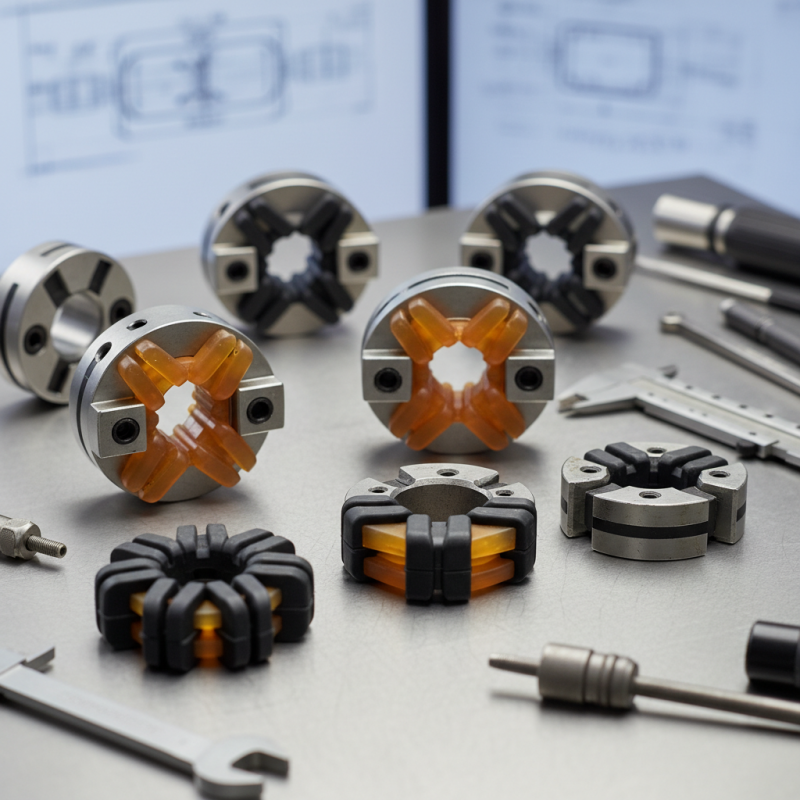
Types of Spider Couplings and Their Mechanical Performance Metrics
Spider couplings come in various types, each excelling in different mechanical performance metrics. These couplings are essential in connecting shafts and can absorb misalignments. They also dampen vibrations which can lead to increased equipment life. Different materials impact their durability. The common choices include rubber and thermoplastic. Each material offers unique benefits but may have limits.
The performance of these couplings is often measured by torque capacity and misalignment tolerance. Higher torque ratings mean better efficiency in power transmission. Misalignment tolerance is crucial for smooth operation. However, choosing a coupling isn't always straightforward. Sometimes, a coupling that performs well under one condition fails under another. Environmental factors can affect durability and performance too.
Users often overlook maintenance and inspection of spider couplings. Regular checks can prevent unexpected failures. It's easy to dismiss these components until issues arise. Monitoring wear and tear extends their lifespan. Understanding the mechanics behind each type helps in making informed choices. Small discrepancies in selection might lead to larger problems later.
Material Composition of Spider Couplings: Impact on Durability and Efficiency
When considering spider couplings, material choice plays a crucial role in determining performance. Different materials yield distinct durability and efficiency levels. For instance, polyurethane options are popular due to their excellent elasticity. They also provide resistance to wear and tear. Reports indicate that polyurethane spider couplings can last up to 50% longer than standard rubber variants in demanding applications.
However, not all materials perform equally well under specific conditions. Recently, studies showed that nylon spider couplings tend to fail under high torque applications. Their rigidity may lead to premature wear. In contrast, rubber-based couplings suit environments with shock absorption needs. Their flexibility aids in reducing vibrations, enhancing overall system efficiency.
Industry data reveals a common oversight: many engineers overlook the environmental impact on material longevity. Humidity and temperature fluctuations can degrade certain plastics. In extreme conditions, failure rates can increase by 25%. Thus, selecting the right material is not just about durability but also about matching the coupling to the operational environment.
Torque Capacity and Flexibility: Key Factors in Selection of Couplings
When selecting spider couplings, torque capacity and flexibility are crucial factors. Torque capacity determines how much force a coupling can transmit without failure. Higher torque ratings often mean better performance for demanding applications. Flexibility, on the other hand, allows couplings to accommodate misalignment between shafts. This is essential in reducing wear and tear on machinery.
When evaluating different coupling types, consider your specific mechanical requirements. Make sure you analyze the torque demands of your equipment. Pay attention to rotational speeds as well. A mismatch can lead to premature failure or inefficiency. Sometimes, flexibility may compromise torque capacity. Finding a balance is not always straightforward.
**Tips:** Regularly inspect couplings for signs of wear or misalignment. This proactive approach can save costs in the long run. Also, consider the operating environment. High temperatures or exposure to chemicals can affect performance. If possible, gather feedback from operators on how the equipment behaves during use. This insight can reveal unseen issues, guiding your selection process.
Applications of Spider Couplings in Industrial Machinery and Their Benefits
Spider couplings are increasingly popular in industrial machinery. They offer versatility and flexibility for various applications. These couplings connect two shafts while accommodating misalignment. This characteristic is beneficial in reducing wear on components. They enhance system longevity, improving the overall mechanical performance.
In manufacturing, spider couplings are used in motors, pumps, and conveyor systems. Their ability to dampen vibrations is crucial. By absorbing shocks, they protect the machinery. This reduces the likelihood of unexpected downtime. Operators often appreciate their maintenance-free nature. However, regular inspections are still necessary. This helps in identifying wear patterns.
Tip: Always consider the operating environment. Temperature and contamination levels impact coupling lifespan. It's essential to match the coupling type to the application requirements.
Engineers may face challenges while selecting the appropriate spider coupling. The wrong choice can lead to inadequate performance. It’s important to assess torque requirements and misalignment angles carefully. Balancing these factors ensures optimal performance.
Best Spider Coupling Types for Optimal Mechanical Performance
This chart illustrates the performance ratings of various spider coupling types used in industrial machinery. Ratings range from 1 to 10, indicating their effectiveness in mechanical performance.
Comparative Analysis of Spider Coupling Designs with Performance Data
When evaluating spider coupling designs, performance data plays a crucial role. Recent industry reports reveal that the most efficient types can reduce energy consumption by up to 15%. A comparison of different designs shows that flexible spiders outperform rigid ones in shock absorption and alignment issues.
Tips: Look for couplings that maximize torque transfer. Consider the operating environment, as temperature fluctuations affect material performance.
Certain designs, like the jaw and disc couplings, excel in high-speed applications. However, they may falter under heavy loads. This highlights the importance of matching the coupling type to specific operational needs. While some spiders offer excellent flexibility, they might reduce overall power transmission efficiency.
Tips: Regular maintenance checks can ensure optimal performance. Keep an eye on wear patterns to avoid failures. Proper alignment is critical; misalignment can lead to premature failure and costly downtime.