| Receiving Hopper |
Stores chocolate or chocolate ingredients before processing. |
Ingredients are loaded into a food-grade hopper and fed gradually into the heating or refining system. |
Commonly manufactured from stainless steel; capacity varies according to machine size. |
Provides a steady supply of material and helps prevent interruptions during production. |
| Heating Tank |
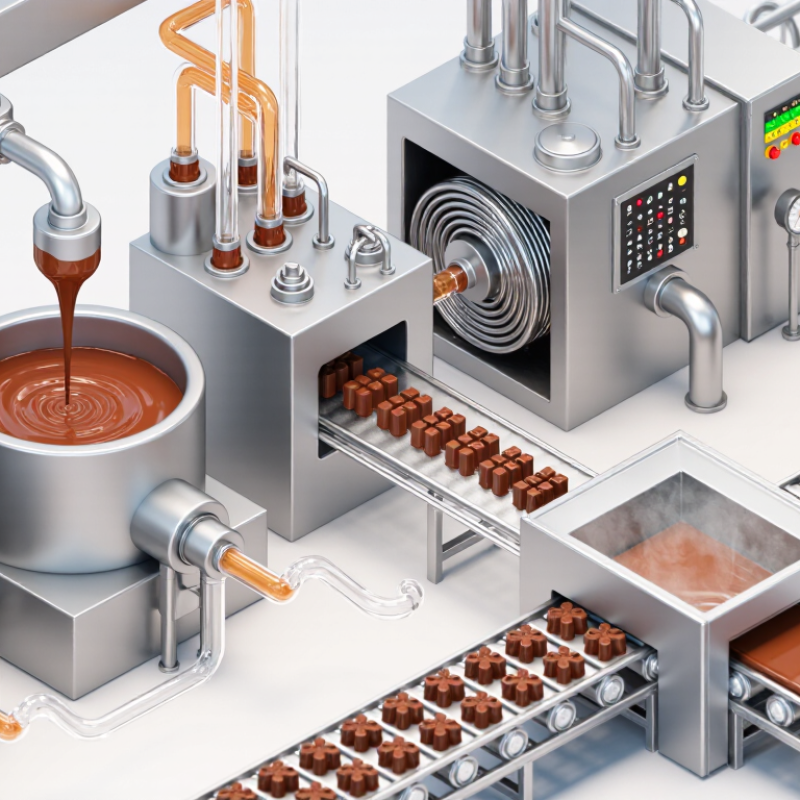
Melts and maintains chocolate at a controlled temperature. |
Electrical heating elements transfer heat through the tank wall or jacket while sensors monitor the product temperature. |
Approximately 40–50°C for melting, depending on chocolate type |
Controlled heating prevents overheating, scorching, and unwanted changes in chocolate texture. |
| Agitator or Mixing Paddle |
Keeps the chocolate mixture uniform. |
A motor-driven paddle circulates the chocolate and reduces settling of cocoa particles, sugar, or other ingredients. |
Variable-speed operation is commonly used for different formulations and viscosities. |
Promotes even heat distribution and consistent composition throughout the batch. |
| Refining Unit |
Reduces the size of sugar and cocoa particles to create a smoother texture. |
Chocolate passes between rollers or through another controlled grinding mechanism that applies shear and compression. |
Finished particle size is often targeted below approximately 30 micrometres for smooth chocolate. |
Particle size strongly affects mouthfeel, flow properties, and perceived quality. |
| Conching Chamber |
Develops flavor and improves texture. |
Chocolate is continuously mixed and aerated while moisture and unwanted volatile compounds are removed. |
Processing temperature and duration vary by recipe; conching may last from several hours to more than 24 hours. |
Helps reduce acidity, improve aroma, and produce a smoother and more balanced chocolate mass. |
| Cocoa Butter or Fat Dosing System |
Adds liquid cocoa butter or other permitted fats in a controlled amount. |
A pump or metering device delivers the fat according to the programmed recipe. |
Flow rate is adjusted to achieve the required viscosity and processing behavior. |
Correct fat dosing improves fluidity, coating performance, and final texture. |
| Tempering Unit |
Forms stable cocoa butter crystals before molding or coating. |
The chocolate is heated, cooled, and gently reheated according to a controlled temperature profile. |
Dark chocolate is commonly tempered near 31–32°C; milk and white chocolate are commonly tempered near 29–30°C |
Proper tempering creates gloss, a clean snap, good contraction, and resistance to fat bloom. |
| Pump and Piping System |
Transfers chocolate between processing stages. |
A sanitary positive-displacement or similar pump moves chocolate through heated pipes and valves. |
Heated lines help maintain flow and reduce the risk of chocolate solidifying inside the piping. |
Provides consistent delivery while reducing spills, air incorporation, and temperature loss. |
| Molding or Depositing Head |
Places a measured quantity of chocolate into molds or onto a product surface. |
Nozzles, pistons, or servo-controlled depositors dispense chocolate at a programmed volume or weight. |
Deposit accuracy depends on viscosity, temperature, nozzle design, and control settings. |
Ensures consistent product size, shape, appearance, and portion weight. |
| Vibration Table |
Removes trapped air from freshly filled molds. |
Controlled vibration makes air bubbles rise and helps chocolate spread into detailed mold cavities. |
Vibration intensity and duration are adjusted for product thickness and formulation. |
Improves surface appearance and reduces internal voids in molded chocolate. |
| Cooling Tunnel or Cooling Cabinet |
Sets the chocolate after molding or coating. |
Chilled, filtered air removes heat gradually while the product moves through a controlled cooling zone. |
Cooling conditions are commonly maintained around 8–15°C, depending on product and process design |
Controlled cooling supports proper contraction, shape retention, gloss, and demolding. |
| Temperature Sensors and Controllers |
Monitor and regulate product and equipment temperature. |
Thermocouples or resistance temperature detectors send readings to a control system that adjusts heating or cooling. |
Accurate temperature control is essential during melting, tempering, transfer, and cooling. |
Prevents temperature fluctuations that can cause poor temper, viscosity problems, or unstable texture. |
| Control Panel |
Allows operators to set, monitor, and record machine parameters. |
A programmable controller coordinates pumps, heaters, mixers, valves, sensors, and alarms. |
Typical settings include temperature, mixing speed, dosing weight, cooling time, and production rate. |
Improves repeatability, process safety, productivity, and quality control. |
| Food-Grade Sanitary Frame and Surfaces |
Supports the machine and provides hygienic product-contact areas. |
Stainless steel surfaces and cleanable designs resist corrosion and allow routine sanitation. |
Product-contact components are commonly made from food-grade stainless steel or other approved materials. |
Reduces contamination risks and supports compliance with food-processing hygiene requirements. |