Why Choose a Laser Distance Meter for Accurate Measurements?
In the world of construction and design, precision is key. A Laser Distance Meter has become an invaluable tool for professionals seeking accuracy. This device measures distances with remarkable precision, providing reliable data for various applications. It eliminates the potential errors associated with traditional measuring methods. The compact design enhances portability, making it easy to use on-site.
Many industries benefit from the advantages of a Laser Distance Meter. Architects, engineers, and contractors rely on its efficiency. This technology saves time and reduces the risk of costly mistakes. However, relying solely on technology has its pitfalls. Users must understand the device’s limitations and ensure it is used correctly. Misinterpretation of data can lead to errors in measurements.
Investing in a Laser Distance Meter reflects a commitment to quality work. It enables accurate measurements, but it also requires knowledge and skill to utilize effectively. The blend of technology and human oversight is crucial in achieving optimal results. With careful consideration, this tool can greatly enhance accuracy in any measurement task.
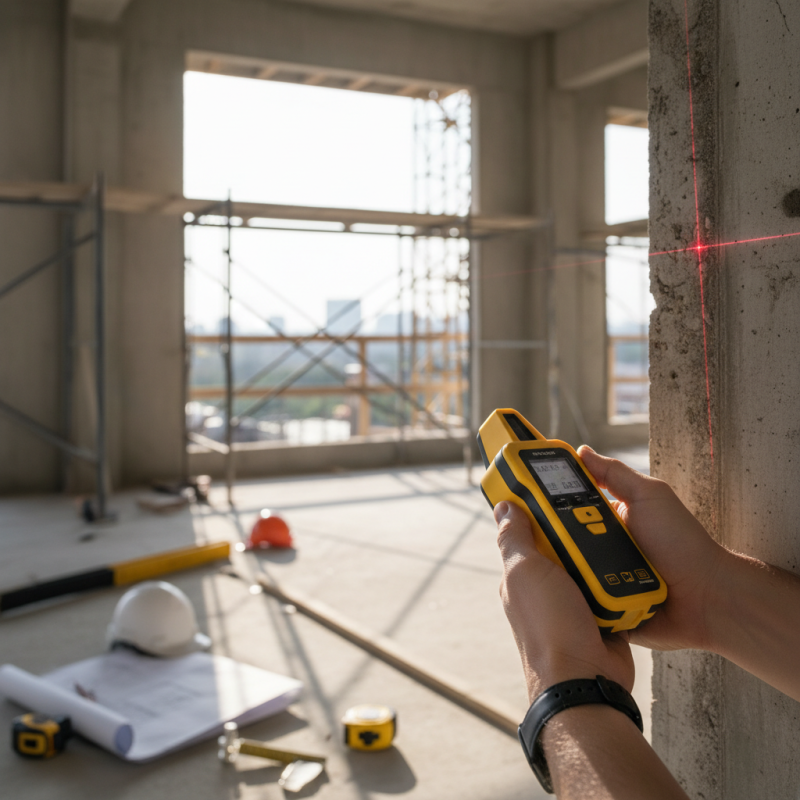
Advantages of Laser Distance Meters Over Traditional Measurement Methods
Laser distance meters have revolutionized the field of measurement, offering numerous advantages over traditional methods. According to industry studies, these devices can achieve an accuracy of ±1/16 inch (±1.5 mm) at ranges up to 300 feet. In contrast, tape measures can easily introduce errors due to user miscalculations or bending. Utilizing technology, laser meters provide reliable measurements quickly and efficiently, often saving professionals hours of labor.
One significant benefit is their ability to measure distances in hard-to-reach places. For instance, when measuring room dimensions, a laser distance meter can eliminate the need for ladders. They are also more convenient for measuring larger areas, where more than one tool is usually required. A survey from the National Institute of Standards and Technology found that laser measurement methods reduced project time by 30% in construction settings.
Tip: Always ensure your laser distance meter is calibrated properly to maintain its accuracy. Misalignment can lead to incorrect readings, negating the benefits of using advanced technology.
Even so, some users may struggle with the laser beam's visibility, especially outdoors. It's important to choose a device with a bright display or additional features like Bluetooth connectivity for remote measurements. This can enhance usability in various environments.
Tip: Practice using the device in different lighting conditions to understand how it performs in real scenarios. This can help navigate challenges effectively.
Accuracy Comparisons: Laser Meters vs. Tape Measures in Various Scenarios
When choosing between laser distance meters and tape measures, accuracy is crucial. Studies show that laser meters can offer accuracy within ±1/16 of an inch (1.5mm) over long distances. Tape measures, while reliable, often suffer from human error. A study published by the National Institute of Standards and Technology indicates that variations from bending or misreading can lead to errors up to 1/8 of an inch (3mm) in standard tape measure usage.
In complex spaces, like construction sites or large rooms, the advantages of laser meters become evident. They can measure up to 300 feet with ease, while tape measures usually max out at 25-30 feet. The accuracy also diminishes significantly in awkward or inaccessible areas where a tape measure falls short. With laser options, the ability to quickly record measurements enhances workflow efficiency. Yet, it's vital to note that environmental factors can impact laser readings, warranting careful consideration of conditions such as lighting or reflective surfaces.
Despite these advantages, laser meters have their drawbacks. They may require charged batteries, which can lead to downtime. Tape measures, in contrast, remain usable without power. Users often report frustration when their laser device runs out of battery at critical moments. Balancing these pros and cons contributes to making the right choice for precise measurement needs.
Industry Applications: Where Laser Distance Meters Excel in Measurement Needs
In various industries, laser distance meters have become essential tools for accurate measurements. Their precision is vital in construction, real estate, and manufacturing. These devices use laser technology to calculate distances quickly, making them superior to traditional measuring methods.
In construction, for instance, a laser distance meter can streamline the process of specifying dimensions for building layouts. A small error in measurement can lead to costly adjustments later on. By using this technology, contractors ensure accurate outcomes from the start.
**Tip:** Always calibrate your laser distance meter before significant tasks to maintain accuracy.
In the realm of real estate, agents utilize these meters to measure property dimensions efficiently. With clear and precise data, they can present potential buyers with reliable information. This fosters trust, enhancing the client-agent relationship.
**Tip:** Take time to practice using the device in various conditions. Different environments can impact measurements, so familiarity is key.
Applications of Laser Distance Meters in Various Industries
Technological Innovations: How Laser Distance Meters Have Evolved
Laser distance meters have seen significant advancements over the years. Early models were bulky and required manual measurements. Today, these devices are compact and user-friendly. Technological innovations have made them accessible for both professionals and DIY enthusiasts. The integration of Bluetooth technology allows seamless data transfer to mobile devices, enhancing efficiency.
Modern laser distance meters are equipped with features like area calculation and memory storage. Users can easily store multiple measurements for future reference. These advancements not only save time but also reduce the margin for error. However, with any technology, there's a learning curve. New users may find themselves struggling with the initial setup. Familiarity with the device is crucial for achieving precise results.
Another evolving aspect is their durability. Many models now withstand tough conditions, making them suitable for outdoor use. However, not all devices are created equal. Some may lack consistency in various lighting conditions. This variability can lead to misunderstandings, especially in critical measurements. Users must be aware of these factors. Continuous practice is essential to master accuracy in all settings.
User-Friendly Features: Enhancing Efficiency with Laser Distance Meters
Laser distance meters have transformed the way professionals approach measurements. Their user-friendly features significantly enhance efficiency. With intuitive interfaces, these devices allow quick readings. Many users report a drastic reduction in measurement errors, with accuracy rates over 99%. Such precision is crucial in fields like construction and surveying.
Consider these tips when using a laser distance meter. Always calibrate your device before a significant project. Check your surroundings for obstacles that may interfere with the laser path. Being mindful of terrain can further ensure accurate results. These small practices make a big difference.
Another advantage lies in the lightweight, portable design of modern laser meters. This feature enables professionals to carry them easily to various job sites. Data collection is streamlined, facilitating effective communication with team members. However, it’s essential to remember that improper usage can lead to costly mistakes. Regular training on device operation can prevent misunderstandings and improve overall efficiency.
Why Choose a Laser Distance Meter for Accurate Measurements? - User-Friendly Features: Enhancing Efficiency with Laser Distance Meters
| Feature | Description | Benefits |
| High Accuracy | Laser distance meters provide precise measurements within millimeters. | Eliminates guesswork and improves project reliability. |
| Ease of Use | Most models have user-friendly interfaces with large displays. | Simplifies operations for both professionals and DIYers. |
| Compact Design | Portable and lightweight for easy transport. | Convenient for on-site measurements. |
| Multiple Measurement Modes | Can measure distance, area, volume, and more. | Versatile tool for various calculation needs. |
| Bluetooth Connectivity | Sync measurements to smartphones or tablets. | Streamlines data management and sharing. |
| Durability | Built to withstand tough job site conditions. | Long-lasting tool for consistent performance. |