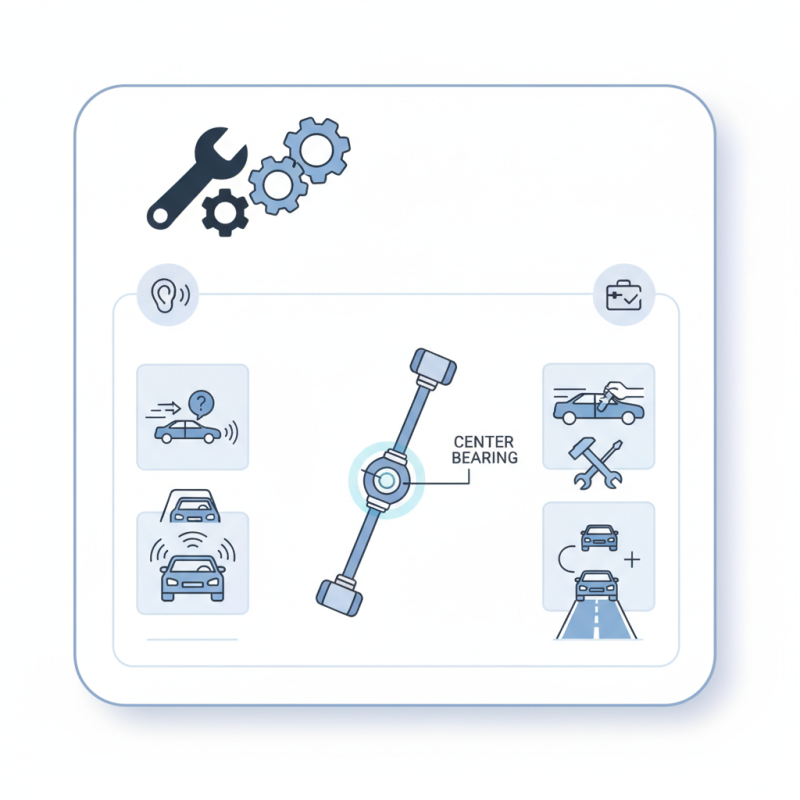
How to Identify and Replace a Center Bearing?
A Center Bearing plays a vital role in vehicle performance. It supports the drive shaft and ensures stability. When the center bearing is worn or damaged, it can lead to vibrations and noise. This issue often indicates it’s time for a replacement.
Identifying a failing center bearing requires careful observation. Drivers may notice unusual sounds during acceleration or turning. Vibrations felt in the cabin can be a key sign as well. Ignoring these symptoms can lead to further damage.
Replacing a center bearing can be a straightforward task for those with basic skills. However, it’s essential to understand the specific steps needed. A lack of proper knowledge can complicate the process. Ensuring the right tools and methods are used will lead to a successful replacement. With the right approach, this task can enhance vehicle longevity and improve driving experience.
Understanding the Function of a Center Bearing
A center bearing plays a crucial role in the drivetrain. It supports the driveshaft and helps transmit power from the engine to the wheels. Without a functional center bearing, vibrations may occur, leading to potential damage. These vibrations may be felt in the cabin, making the driving experience uncomfortable.
A worn or damaged center bearing can also affect alignment. As it deteriorates, misalignment may occur. This misalignment can lead to uneven tire wear and impact vehicle handling. Regular inspection of the center bearing is essential. Look for signs of wear, such as cracks or excessive play.
If issues are identified, replacing the center bearing should be a priority. It can prevent further complications and maintain operational efficiency. Removing the old bearing can be tricky. Ensure proper tools are available and follow safety precautions. Installing the new bearing correctly is equally important. Misalignment during installation can lead to future problems.
Signs That Indicate a Failing Center Bearing
A failing center bearing can lead to serious vehicle issues. Drivers should be aware of specific signs. An unusual vibration during acceleration is one of them. If you feel the car shaking, especially at higher speeds, it might indicate a problem. This sensation often worsens over time.
Another common symptom is unusual noise. A clunking or grinding sound can signal bearing wear. Listen for these noises when driving. They may be more noticeable when turning or accelerating. Ignoring them could lead to bigger issues.
Lastly, check for visible signs of damage. Look for oil leaks or a misaligned driveshaft. These could hint at a failing center bearing. If any of these signs appear, it’s best to have a mechanic inspect your vehicle. Ignoring the issue may lead to more costly repairs later on. Stay aware and proactive about your vehicle’s health.
Signs Indicating a Failing Center Bearing
Tools Required for Center Bearing Replacement
When replacing a center bearing, having the right tools is crucial. Typically, you will need a wrench set, screwdrivers, pliers, and a torque wrench. Each tool plays a vital role in ensuring the job is done safely and effectively. Using quality tools is essential for minimizing risks during the repair process.
Industry data reports indicate that improper installation can lead to excessive wear and potential failure of the new bearing. Approximately 30% of DIY installations are compromised due to inadequate tool usage. A good bearing puller can save you hours of frustration. Always ensure that your tools are in good condition. Dull tools or incorrect sizes can lead to mistakes.
In some cases, a jack and jack stands may be required to access the center bearing. This is not just to lift the vehicle, but also to ensure the workspace is safe. The process can be intimidating for beginners. It requires careful preparation and attention to detail. Failure to follow safety protocols can lead to serious injuries. Always reflect on your method and ensure no steps are overlooked.
How to Identify and Replace a Center Bearing? - Tools Required for Center Bearing Replacement
| Tool Name | Purpose | Usage Tips | Estimated Cost |
| Socket Wrench Set | To remove and install bolts | Ensure you have the correct socket size | $20 - $50 |
| Wrench | To hold nuts and bolts | Choose adjustable wrenches for versatility | $10 - $30 |
| Screwdriver Set | To remove screws | Use the right type for efficiency (flathead or Phillips) | $15 - $40 |
| Pry Bar | To remove old center bearings | Use with care to avoid damage | $10 - $25 |
| Torque Wrench | To ensure bolts are tightened to specified torque | Calibrate before use for accuracy | $30 - $100 |
| Grease | For lubrication | Choose the appropriate type for your vehicle | $5 - $15 |
Step-by-Step Guide to Replacing a Center Bearing
Replacing a center bearing can seem daunting. However, following a clear, step-by-step guide will simplify the process. Begin by lifting the vehicle securely, using jack stands. This ensures safety while you work underneath. A center bearing usually supports the driveshaft, giving you a smoother ride. It's essential to check for signs of wear, such as vibrations or noise.
Once identified, removing the old bearing requires some attention. Start by loosening any bolts holding the driveshaft in place. Carefully slide it out from the transmission. Often, a center bearing failure results from inadequate lubrication. Research shows that 30% of failures are lubrication-related. So, before installing the new bearing, apply fresh grease. This small step can significantly extend the new bearing's lifespan.
After the new bearing is in place, reattach the driveshaft. Make sure everything aligns correctly. Misalignment can lead to new issues down the road. It's also vital to test the vehicle. Drive it slowly to listen for any odd noises or vibrations. If everything feels right, you've done a solid job. However, if problems persist, consider consulting a professional. Being thorough now can prevent bigger headaches later.
Safety Precautions During Center Bearing Replacement
When replacing a center bearing, safety should always come first. Ensure the vehicle is parked on a flat surface, and use wheel chocks to prevent movement. Wearing protective gear is essential. Safety glasses can shield your eyes from debris. Gloves protect your hands from sharp edges.
Before starting, disconnect the battery. This prevents electrical issues while you work. Using jack stands is critical when lifting the vehicle. Do not rely solely on a hydraulic jack. This can be a costly mistake. Ensure everything is stable before crawling underneath.
Working with tools can pose risks. Always inspect your tools before use. Frayed wires or loose parts can lead to accidents. If you’re unsure about any step, seek help. It’s better than facing injuries or damage. Safety might seem basic, but overlooking details can be dangerous. Stay focused and take your time during the process.