7 Tips for Buying White Birch Veneer
White Birch Veneer is valued for its pale color, fine grain, and clean look, but a product photo cannot tell you everything. A warm studio light may hide yellow tones. A close crop may conceal patches, seams, or uneven grain. Look beyond appearance, and check how the veneer will be used: on a cabinet door, a curved panel, or a large wall surface.
Technical references help make those checks more meaningful. The USDA Forest Products Laboratory’s Wood Handbook (FPL-GTR-282, 2021) explains how moisture content, grain direction, and wood characteristics affect performance. For hardwood plywood panels, ANSI/HPVA HP-1 offers a useful grading reference, though veneer sellers may use their own descriptions. Ask what a grade means in writing. Small differences matter. Verify the species, face quality, backing, thickness, sheet size, and whether the veneer is sliced or rotary cut. Request a current sample, then view it under the lighting planned for the finished space. Check the edges, too.
Buying well is not just choosing the whitest sheet. A slightly varied grain can look more natural, while a near-uniform face may suit a modern design. Neither is automatically better. The seven tips ahead focus on practical checks, supplier questions, and common trade-offs, so you can compare options with fewer surprises. Even careful selection has limits: natural wood varies, and a sample cannot represent every sheet in a shipment.
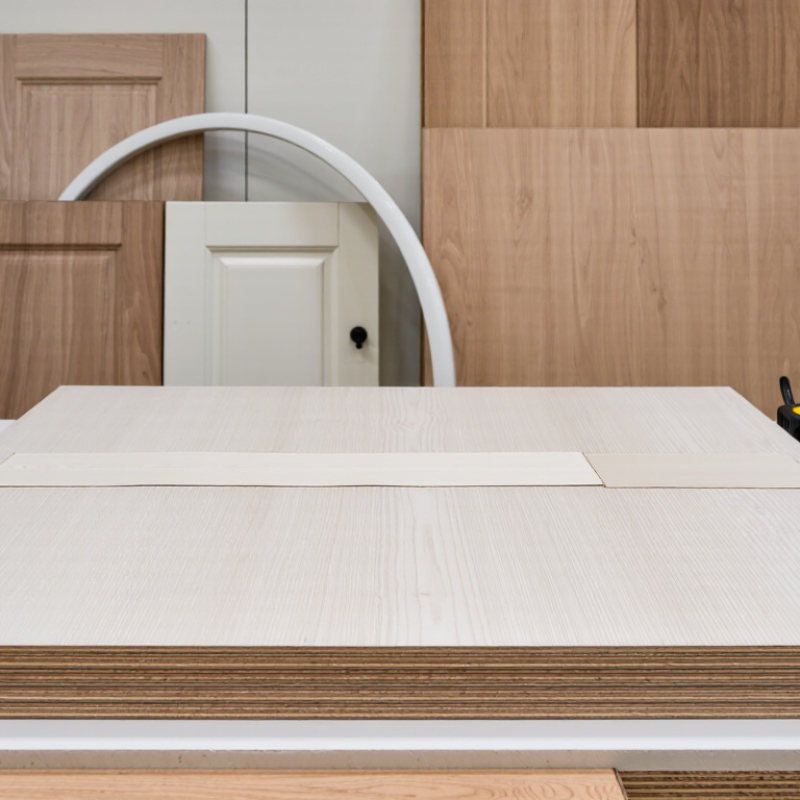
Identify the Birch Species and Compare Its Typical Density of About 650 kg/m³
Before buying White Birch Veneer, confirm the botanical species. “White birch” often refers to paper birch, but sellers may use the name loosely. The USDA Forest Products Laboratory’s Wood Handbook (FPL-GTR-282, 2021) reports different specific-gravity values for birch species, reflecting real variation in wood weight and structure. A practical density reference is about 650 kg/m³ at roughly 12% moisture content. Treat it as a guide, not a guarantee. Density changes with species, moisture, and the part of the log used.
Ask the supplier which species the veneer came from and how density was measured. The figure for solid wood does not describe the finished panel, which may include a lighter core and adhesive. Check the stated moisture condition, too; comparing a dry sample with a wetter one can give a misleading impression. A small sample helps: feel its weight, inspect the grain under side lighting, and look for torn fibers or uneven thickness. Numbers help. They do not replace inspection. I would pause if a quote gives “650 kg/m³” without naming the species or test basis; that detail is easy to overlook, and it matters.
Assess Face Grade, Color, Grain, and Defects Using EN 635-2
When buying white birch veneer, treat EN 635-2 as a reference for classifying hardwood face appearance, not a guarantee of uniform color or performance. Confirm the specified face grade in writing, and ask how the supplier applies it to the sheets you will receive. Grade descriptions can be misunderstood. A clear sample helps.
Look at several sheets under neutral light. White birch may range from pale cream to light pink, with subtle differences between sapwood and heartwood. Check that the variation suits the finished surface. Then follow the grain: straight, even lines create a calm look, while stronger changes may stand out across a large panel. Grain matters.
Inspect the face for knots, pinholes, splits, patches, mineral streaks, and sanding marks. Note which defects are acceptable for your use, rather than relying on a grade name alone. A flaw that disappears inside a cabinet may show clearly on a wide door. This is easy to underestimate. Compare the actual sheets with the approved sample, and ask about matching and allowable variation before ordering. EN 635-2 helps structure the conversation, but the written specification should describe the result you need.
Check Decorative Face Thickness: Common Commercial Veneers Are 0.5–0.6 mm
White birch veneer can look smooth under showroom lights, yet its face layer is thin and easy to sand through. Common commercial decorative faces are often specified at 0.5–0.6 mm. Treat that as a buying benchmark, not a universal standard. Ask for the nominal thickness and tolerance in writing, and confirm whether the stated measurement is before sanding.
Tip: Request a sample from the actual production batch. Check its cut edge with a veneer caliper, then inspect the grain and color in daylight. A tiny edge gap matters. Also ask whether the panel has been sanded, since sanding can reduce the remaining face thickness.
The USDA Forest Products Laboratory’s Wood Handbook—Wood as an Engineering Material (FPL-GTR-282, 2021) explains that moisture changes affect wood dimensions. So assess veneer on the finished panel, not only as a loose sheet. I would not choose by thickness alone; substrate flatness and bonding matter too. Still, I have seen buyers overlook face thickness, then discover that a repair leaves a pale patch. Check the product specification and keep a sample for comparison.
Inspect Moisture Condition, Flatness, and Matching Before Purchase
7 Tips for Buying White Birch Veneer
Inspect Moisture Condition, Flatness, and Matching Before Purchase
Before buying white birch veneer, check its moisture condition rather than relying on appearance alone. Use a calibrated moisture meter on several sheets, including near the edges, and compare readings across the stack. Large differences may signal uneven storage or acclimation. Ask how the veneer was stored, then let it adjust to your workshop before bonding. A rushed purchase can become a frustrating repair.
Lay sheets on a clean, level surface and inspect them in soft, even light. Look for ripples, curled corners, cracks, and raised grain. Run your hand lightly across the face; small defects can be easier to feel than see. Check several sheets, not just the top one. One sheet can still surprise you. Veneer may also respond differently after pressing, so a flat sample is useful, but not a guarantee.
Matching matters when a project needs a continuous face. Place adjoining sheets side by side and compare grain direction, color, and figure. Ask whether they are sequenced or book matched, and confirm the intended layout before cutting. White birch can shift from pale cream to warmer tones, even within one bundle. Finish may deepen that contrast. I have learned that a quick glance is not enough; photographing the proposed arrangement can reveal mismatches you missed in the shop.
7 Tips for Buying White Birch Veneer
Inspect moisture condition, flatness, and matching before purchase.
The 1–5 scores indicate practical checklist priority, not measured industry statistics. Check moisture against the project specification, inspect sheets for bowing or waviness, and confirm that veneer leaves have the desired color and grain match. Also verify thickness consistency and look for visible defects before approving the order.
Verify Core Bonding and Formaldehyde Emissions Against Applicable Standards
Tip: Request the panel’s core-bonding test results, not just a sales sheet. Confirm the test method, product thickness, and conditioning used. These details help you compare results with the project specification and applicable regional standards. A strong-looking edge is not proof of a durable bond. Ask whether the tested construction matches the white birch veneer you plan to buy.
Tip: Check formaldehyde-emission reports for the exact panel type and production lot, when available. Verify the stated test method and limit against the standards that apply to your project. A certificate without a clear scope can be hard to interpret. Ask the supplier to explain any unfamiliar figures. Keep the report with your purchase records.
Tip: Inspect a sample after exposure to ordinary site conditions. Look for lifted veneer, open edges, or layers separating near a cut. That matters. It is easy to overvalue a tidy face and overlook the core. I would not rely on appearance alone; test reports and a careful sample check answer different questions. Allow time to review both before ordering.