
Choosing Heat Exchanger Plates is a practical engineering decision, not just a matter of matching dimensions. A plate that looks suitable in a catalog may struggle with the actual fluid, temperature, or operating pressure. Small details matter. A narrow channel can raise turbulence and improve heat transfer, yet it may also increase pressure drop. Deposits on the plate surface can gradually reduce performance.
Dr. Ramesh K. Shah, known for his work on compact heat exchangers, offers a useful principle when his published engineering ideas are paraphrased: “Choose the design around the real duty, not a single headline rating.” This is an editorial paraphrase, not a verbatim quotation. It points to a common selection mistake: focusing on heat-transfer capacity while overlooking material compatibility, fouling risk, gasket limits, and cleaning access. The right choice depends on the full operating picture.
These seven tips will help you assess plate type, material, flow arrangement, pressure drop, and maintenance needs. They also highlight the value of accurate process data, including flow rate, inlet temperatures, and fluid properties. A few degrees or a change in fluid composition can affect the result. Check the supplier’s specifications, ask how performance was calculated, and confirm that the proposed plates suit your operating conditions. Do not assume that a familiar model will fit every duty. A careful review may take longer, but it can prevent costly performance surprises.
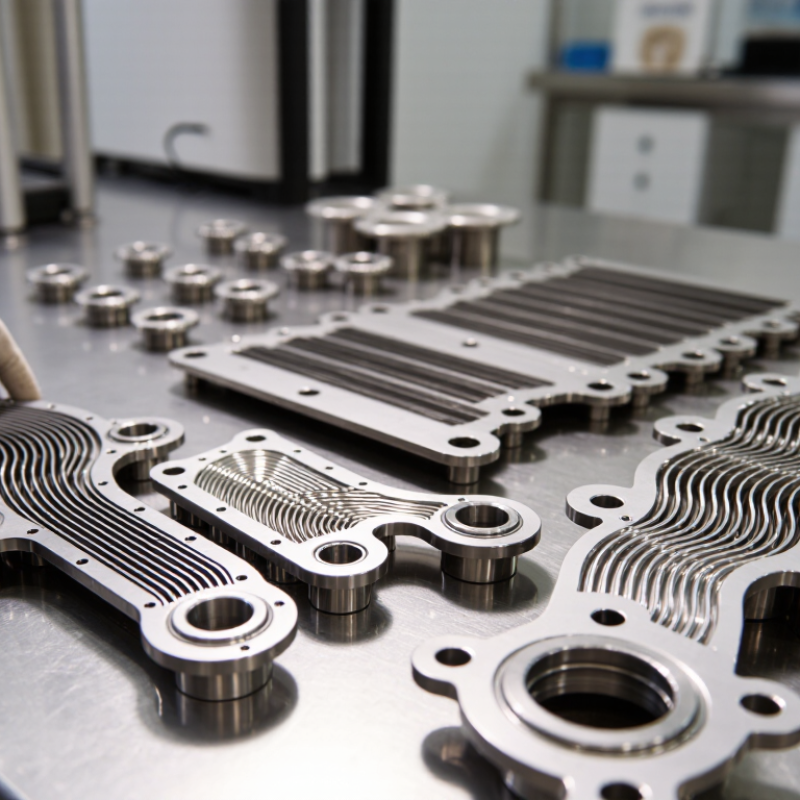
Defining operating conditions is the practical starting point for selecting heat exchanger plates. Record each fluid’s inlet and outlet temperatures, flow rates, pressure, and allowable pressure drop. Include startup, shutdown, and seasonal extremes, not just the steady-state figures on a process sheet. Small changes matter. A colder-than-expected inlet can shift the required heat-transfer area and outlet temperature.
The U.S. Department of Energy’s 2008 report, Waste Heat Recovery: Technology and Opportunities in U.S. Industry, estimates that 20–50% of industrial energy input may leave as waste heat. This broad range is not a plate-sizing rule, but it shows why dependable process data matter when evaluating heat recovery. Estimate the duty using measured flow and fluid properties, then check whether the required temperature approach is realistic. A very narrow approach may demand more area and increase sensitivity to fouling.
Describe the fluids, too. Note suspended solids, viscosity, corrosive components, and cleaning methods. These details influence plate pattern, material, and maintenance intervals. Verify the design against credible operating measurements and the equipment’s pressure limits. One uncomfortable question remains: are the readings representative, or were they taken on an unusually smooth production day? That gap deserves attention before plates are specified.
Plate material must match both the fluid and its hottest operating condition. A warm, chloride-rich brine can attack a plate differently from clean water, especially where deposits or stagnant pockets form. Check chloride concentration, acidity, dissolved oxygen, and cleaning chemicals—not just the fluid’s name. Temperature matters because corrosion can accelerate as metal heats, while thermal cycling stresses plates and joints.
ASM International’s materials data tables report thermal conductivity near 16 W/m·K for 316 stainless steel and about 22 W/m·K for commercially pure titanium; copper is roughly 400 W/m·K. These are typical values, not a performance ranking. Copper transfers heat well, but that advantage is irrelevant if the process fluid corrodes it. Titanium may suit some seawater duties, while stainless grades require careful review in chloride service. Useful, but incomplete. A conductivity figure cannot predict service life.
Ask suppliers for corrosion data at your actual concentration and temperature, then compare it with process samples or a small field trial. Include cleaning cycles and upset temperatures in the review. I have seen chemistry sheets omit those details; the neatest specification can still miss the real operating condition. Verify the selected grade against current technical data and qualified engineering guidance.
| Tip | What to Evaluate | Typical Material Considerations | Important Checks |
|---|---|---|---|
| 1. Identify every fluid constituent | Record fluid composition, concentration, pH, dissolved gases, suspended solids, and expected contaminants for both sides of the exchanger. | 304L stainless steel may suit many mild, clean water services. 316L is often considered for more demanding general-purpose water and process services. | Do not choose from the fluid name alone. Small amounts of chlorides, sulfides, or oxidizing agents can change corrosion behavior. |
| 2. Check chloride exposure | Assess chloride concentration, temperature, oxygen level, flow conditions, and the possibility of deposits or stagnant areas. | Titanium is commonly considered for many chloride-bearing waters, including seawater service. Higher-alloy stainless steels may be candidates in some less severe conditions. | 316L can pit or suffer crevice corrosion in chloride environments; it should not be assumed suitable for seawater. Confirm suitability for the actual conditions. |
| 3. Match the alloy to acid or alkaline chemistry | Specify acid or alkali type, concentration, impurities, aeration, and both normal and upset temperatures. | Nickel-based alloys may be considered for selected aggressive chemical services. Titanium can perform well in many oxidizing environments but is vulnerable to hydrofluoric acid and some hot, concentrated reducing acids. | Corrosion resistance is highly chemistry-specific. Verify the exact alloy grade against reliable corrosion data for the full operating range. |
| 4. Include operating and cleaning temperatures | List normal, minimum, maximum, start-up, shutdown, and chemical-cleaning temperatures for each fluid. | Material choice depends on temperature as well as chemistry. Higher temperature can accelerate corrosion or change the behavior of a fluid-metal combination. | Check the plate material, gaskets, and other wetted components against the exchanger’s design limits. Do not treat a material’s general temperature capability as a service guarantee. |
| 5. Consider deposits, crevices, and flow conditions | Review fouling, sediment, local low-flow zones, plate contact areas, and the potential for under-deposit corrosion. | More corrosion-resistant alloys may be warranted where deposits or tight crevices are difficult to avoid; the appropriate grade depends on the fluid and operating conditions. | Material upgrades do not replace good design and maintenance. Evaluate cleaning access, filtration, flow distribution, and the risk of localized corrosion. |
| 6. Confirm compatibility with cleaning chemicals | Document cleaning-agent type, concentration, temperature, contact time, and frequency, including any rinse or neutralization steps. | A plate material that suits the process fluid may not suit the cleaning solution. Check each proposed alloy against both process and cleaning chemistry. | Include gasket compatibility in the review. Follow validated cleaning procedures and avoid assuming that a brief cleaning cycle is harmless. |
| 7. Validate the selection for the complete duty | Review pressure, temperature cycling, corrosion allowance where applicable, service life, inspection access, and consequences of leakage between circuits. | Compare candidate grades using service-specific corrosion data and, for uncertain or critical duties, representative testing or operating experience. | Have the final material selection reviewed against the exchanger design and applicable requirements. Confirm that all wetted parts are compatible with both fluids. |
Selection note: Material suitability depends on the exact alloy grade, fluid composition, concentration, temperature, pressure, and operating conditions. These are general screening guidelines, not a substitute for a service-specific corrosion review.
Plate patterns shape how fluid moves across a heat exchanger surface. A steep chevron angle usually creates stronger turbulence and improves heat transfer. It also tends to increase pressure drop. A shallower pattern offers an easier flow path, but may require more surface area to deliver the same thermal duty.
The right balance depends on the actual operating conditions. Compare the fluid’s viscosity, flow rate, temperature range, and tendency to foul. For example, a thick fluid moving slowly through narrow channels may need a more open pattern to keep pumping demands manageable. Yet choosing the lowest-resistance option can leave heat transfer weaker than expected. There is a trade-off.
Review both the exchanger’s pressure-drop limit and the available pump capacity before selecting a plate design. Ask for performance estimates at realistic flow rates, not just ideal conditions. Small changes matter. A few extra kilopascals can affect energy use over long operating hours, while a pattern that promotes turbulence may help reduce deposits in some applications. Still, no pattern prevents fouling entirely. Calculations can miss real-world variation, especially when fluid properties shift during operation. Check the assumptions, and leave room to revise them.
Before ordering replacement plates, match the gasket profile and attachment method to the heat exchanger’s exact model and plate pattern. A gasket that looks close may still sit unevenly in its groove. Check its material against the process fluid, operating temperature, and cleaning chemicals. Compatibility changes with service conditions. Confirm these details in the equipment documentation, rather than relying on appearance alone. Also verify plate dimensions, port positions, and connection sizes. A small mismatch can restrict flow or cause leaks after the unit is tightened.
The frame must accommodate the plate count and the specified compressed pack dimension. Check the tightening limit and inspect the frame for corrosion, distortion, or damaged tie bolts. System pressure and temperature matter, too; a plate set suitable for one duty may not suit another. Allow space to open the frame and remove plates for inspection. Often overlooked. If operating conditions have changed since the original installation, compare current flow rates and fluid properties with the exchanger’s limits. Records are not always complete, so measure carefully and flag uncertainties before fitting parts. Leave enough clearance for tools around the connections.
Assess Maintenance Needs, Standards, and Lifecycle Costs
Match plate materials to the fluid, temperature, and cleaning method. Corrosion resistance matters, but so does access for inspection. Ask how plates are removed, cleaned, and replaced, and check gasket availability before purchase.
Review the maintenance schedule and likely fouling. A few millimeters of scale can affect heat transfer; actual impact depends on the process. Small detail. Big difference.
Check applicable pressure-vessel requirements, material traceability, and documented inspection procedures. Requirements vary by location and operating conditions, so confirm them with a qualified engineer.
Compare lifecycle costs, not just the purchase price. The U.S. Department of Energy’s life-cycle cost guidance includes energy, maintenance, replacement, and disposal costs. The IEA’s Energy Efficiency 2023 report estimates industry accounts for about 37% of global energy use, making operating efficiency worth careful review.
Ask for performance data at your real flow rates and temperatures.
Compare expected cleaning downtime and spare-plate needs.
Model costs over the expected service life, including energy use and labor. A spreadsheet may still miss the cost of an unplanned shutdown. That part deserves a second look.