Top 10 Switching Power Supply Advantages You Need to Know?
In recent years, the demand for efficient power solutions has soared. The global market for Switching Power Supply is projected to reach $37.5 billion by 2026, according to industry analysts. This growth highlights the critical role of these power supplies in sectors such as consumer electronics, telecommunications, and automotive applications.
Switching Power Supplies offer numerous advantages over traditional linear power supplies. They are smaller, lighter, and more efficient, often exceeding 90% efficiency rates. This efficiency significantly reduces energy consumption. However, challenges remain, such as electromagnetic interference and potential heat generation, which need careful management.
Understanding these benefits and drawbacks is essential for industries seeking optimal performance. The insights into Switching Power Supply can lead to better design choices and result in substantial cost savings. As technology evolves, these power supplies will continue to play a pivotal role in driving innovation across various sectors.
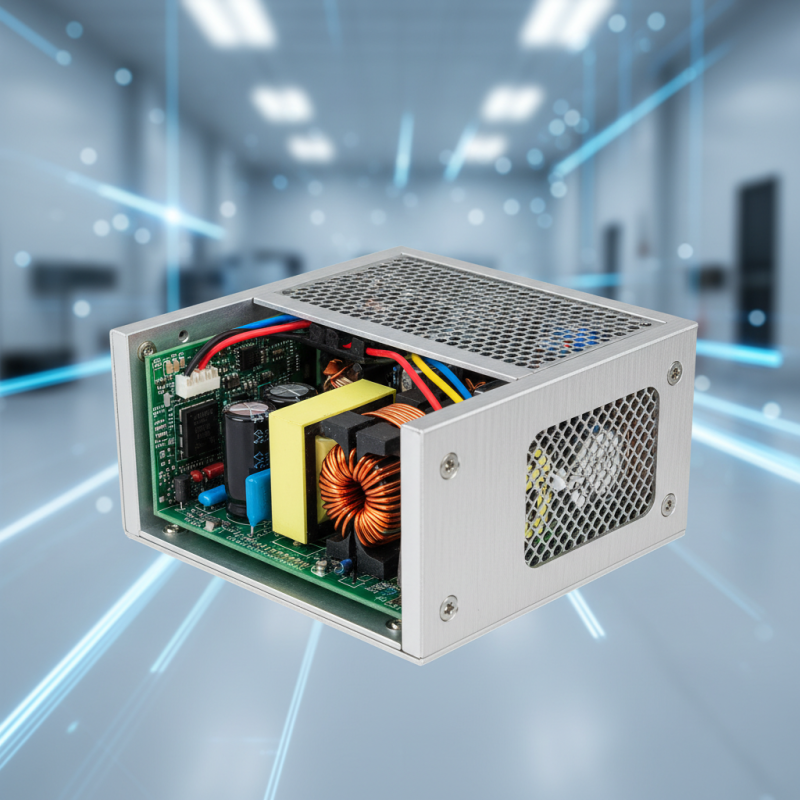
Key Features of Switching Power Supplies
Switching power supplies offer notable features that significantly enhance performance across various applications. One key characteristic is their high efficiency. Reports indicate that modern switching power supplies can achieve efficiencies exceeding 90%. This is crucial for minimizing energy loss, particularly in large systems. Heat dissipation is also reduced, extending the lifespan of electronic components.
Another important feature is their compact size. Compared to traditional linear power supplies, switching designs can be considerably smaller. This allows for more flexibility in design, making them suitable for space-constrained applications. According to engineering studies, these supplies can save as much as 50% in space. This compactness sometimes comes at the cost of electromagnetic interference. Careful design considerations are required to mitigate potential issues with noise.
Furthermore, switching power supplies are versatile. They can be designed to operate under a wide range of input voltages. This adaptability is beneficial in many industries, from consumer electronics to industrial machinery. However, this flexibility can also lead to complexity in circuit design. Balancing performance and stability remains an ongoing challenge for engineers in this field.
Top 10 Advantages of Switching Power Supplies
Efficiency and Energy Savings Compared to Linear Supplies
Switching power supplies have become increasingly popular due to their efficiency and energy savings compared to linear supplies. According to the U.S. Department of Energy, switching power supplies can achieve efficiency ratings of over 90%. In contrast, linear supplies typically operate at around 30% to 50% efficiency. This significant difference translates into reduced energy consumption, which can lead to considerable cost savings in energy bills over time.
Moreover, switching supplies generate less heat. A reduction in heat generation means a lower need for cooling systems, further enhancing energy savings. The Energy Star program highlights that power supplies with higher efficiencies can decrease overall energy use by an estimated 30% in many applications. However, there's a caveat. While switching supplies are efficient, they may introduce electrical noise in sensitive operations. This can be a drawback in specific applications requiring precise signal integrity.
In the context of environmental impact, the carbon footprint of using switching power supplies can be lower. A report from the International Energy Agency notes that improved efficiency leads to less energy wasted, which is crucial in a world focused on sustainable practices. Still, manufacturers must navigate these benefits against the complexity and potential cost of switching supply designs. It's an ongoing challenge that needs careful consideration.
Top 10 Switching Power Supply Advantages You Need to Know
| Advantage | Description | Efficiency (%) | Energy Savings (%) |
| Compact Size | Smaller form factor compared to linear supplies. | 85 | 20 |
| Weight Reduction | Lighter components lead to easier handling and installation. | 90 | 15 |
| Higher Efficiency | Converts AC to DC with less energy loss. | 90 | 25 |
| Reduced Heat Generation | Less heat produced minimizes cooling requirements. | 88 | 30 |
| Wide Input Voltage Range | Stable performance across various voltage inputs. | 95 | 10 |
| Low Electromagnetic Interference | Designed to minimize emissions and noise. | 92 | 20 |
| Cost-Effectiveness | Lower overall costs due to less material and energy waste. | 87 | 18 |
| Versatile Applications | Suitable for various devices like computers, TVs, etc. | 89 | 20 |
| Longer Lifespan | Robust components lead to extended operational life. | 91 | 22 |
| Stable Output Voltage | Consistent performance under varying loads. | 93 | 24 |
Size and Weight Advantages in Design and Application
The design of switching power supplies offers notable size and weight advantages. Many modern applications require compact solutions. This is where switching power supplies shine. They are often much smaller than linear power supplies. A switching power supply can fit into tight spaces without sacrificing performance.
In various applications like consumer electronics and industrial systems, reducing weight is crucial. Many engineers aim to minimize bulk. Switching power supplies typically have higher efficiency. This means they generate less heat, allowing for smaller heat sinks and lighter enclosures. However, one must consider the trade-offs. Compact designs can lead to challenges in heat dissipation or electromagnetic interference.
As technology advances, the demand for smaller devices grows. Transitioning to switching power supplies often makes sense. Yet, it can complicate design processes. Engineers must think carefully about layout and component choice. Balancing size and performance isn't always easy. There can be unexpected hurdles along the way. Ultimately, the pursuit of compactness can lead to innovation, albeit with challenges to overcome.
Versatility Across Different Voltage and Current Requirements
Switching power supplies are incredibly versatile. They adapt to different voltage and current needs effortlessly. This adaptability makes them ideal for various applications. Imagine powering a small gadget and then scaling up to industrial machinery. These power supplies handle it all.
When working with diverse electrical systems, it’s essential to choose the right power supply. Look at the specifications carefully. Understand both voltage and current limits. This ensures smooth operation. Sometimes the components might not match perfectly. If that happens, you could experience inefficiencies or even failures.
Tip: Always double-check compatibility between your devices and the power supply. It's a simple step that can save you time and energy. Moreover, plan for future expansion. Anticipate any potential upgrades. Choosing a flexible power supply now can prevent issues later.
The real challenge is often the balance between performance and efficiency.
Switching power supplies can be efficient but might not always be perfect. Some variations may produce noise or heat. This can affect sensitive equipment. So, testing and monitoring are crucial as you implement these systems.
Cost-Effectiveness and Production Benefits in Modern Electronics
Switching power supplies have transformed modern electronics in remarkable ways. Their cost-effectiveness is evident in various applications. These supplies are smaller and lighter than traditional transformers, leading to lower shipping costs and easier integration into products. As products become more compact, the demand for efficient power supplies grows.
Production benefits are also substantial. Switching power supplies have higher efficiency. This means less energy wasted as heat. Many devices can operate more effectively without bulky cooling systems. However, some systems still produce noise, which can be a concern for sensitive applications. Manufacturers need to address these issues.
Another aspect to consider is the complexity of design. Creating a reliable switching power supply can be challenging. Engineers must ensure proper circuit design to avoid instability. Failure to do so can lead to inefficiency. Balancing functionality and production costs is crucial. Despite potential downsides, these power supplies remain a favored choice in modern electronics. Their advantages often outweigh the concerns, making them a staple in the industry.