Top 10 Water Filter Tips for Global Buyers to Choose Right?
In today’s world, choosing the right Water Filter is essential for ensuring safe drinking water. With various options available, global buyers face numerous challenges. Understanding the features and benefits of different water filter types is crucial. This article outlines ten valuable tips that can guide you in selecting the right water filter for your needs.
Water filters can vary significantly in terms of technology and efficiency. Knowing these differences helps buyers make informed decisions. A lack of awareness can lead to buying ineffective products, which is a common regret among consumers. Additionally, the availability of filters can differ by region. It is vital to consider local water quality before making a purchase.
Choosing the correct water filter is not just about price. It's about investing in health and safety. Customers often overlook filter maintenance and replacement, leading to decreased performance. With these tips, buyers can find reliable options that offer both quality and peace of mind. The right choice can make all the difference in staying hydrated and healthy.
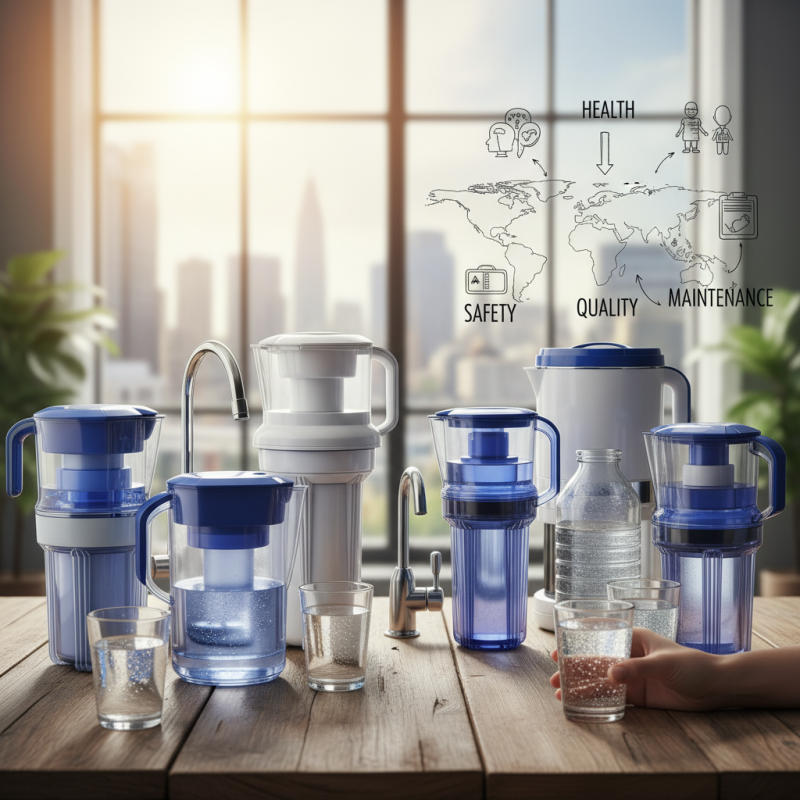
Understanding Different Types of Water Filters Available in the Market
When choosing a water filter, understanding the different types available is crucial. There are several categories, each serving specific needs. Activated carbon filters are popular for removing chlorine, odors, and sediment. According to a 2022 report by the Water Quality Association, nearly 30% of water consumers prefer these filters for their effectiveness and cost-efficiency.
Reverse osmosis systems, on the other hand, are known for their ability to remove impurities, such as lead and nitrates. They utilize a semi-permeable membrane to filter out contaminants. A study by the Environmental Protection Agency found that these systems can eliminate over 90% of total dissolved solids. Users should be aware, though, that RO systems require proper maintenance to avoid bacterial growth.
Ultraviolet (UV) filters offer a different approach. They kill bacteria and viruses, ensuring water safety. However, they don't remove physical contaminants. A comprehensive analysis in 2021 indicated that while UV filters are effective for disinfection, users might overlook the need for pre-filters to address turbidity. This gap can lead to less efficient purification. Therefore, aligning filter types with specific water quality issues is essential for effective usage.
Key Features to Consider When Choosing a Water Filter
When selecting a water filter, understanding key features is vital. Experts emphasize the importance of filtration type, capacity, and maintenance. A water filter should effectively remove contaminants to ensure safe drinking water. Look for systems that utilize advanced technologies, such as activated carbon or reverse osmosis. These methods are known for their efficiency.
Consider the system's flow rate. A slower filtration rate may indicate a more thorough process, but it can be inconvenient. Users often overlook this aspect, leading to frustration during daily use. Maintenance frequency is another crucial factor. A filter that requires constant changes might not fit everyone's lifestyle.
Don't forget to check certifications. Products tested by government or independent organizations provide assurance of quality. Look for labels that indicate compliance with safety standards. Understanding your local water quality can also guide your choice. What works well in one area may not be effective in another. Always ask questions and do your research before making a decision.
Assessing Water Quality: Why Testing Matters Before Buying
Assessing water quality is crucial for making informed choices about water filters. The United Nations reports that 2 billion people lack access to safe drinking water. Testing your water can reveal contaminants like lead, chlorine, and bacteria. For instance, a study by the Environmental Protection Agency (EPA) shows that 15% of water systems do not meet safety standards. This alarming statistic emphasizes the need for well-informed decisions.
Few consumers test their water before buying a filter. Many assume their tap water is safe. However, local water reports can be misleading. Some contaminants might not be included, leading to potential health risks. Testing your water at home with a reliable kit can identify specific threats. Reports suggest that over 40% of household water has some level of contamination.
Choosing the right filter without proper assessment can lead to disappointment. Not all filters can remove every contaminant. Understanding your water's unique quality helps narrow down options. Additionally, only 30% of users know how often to replace filter elements effectively. This knowledge is vital to ensure consistent performance. Regular testing and monitoring can enhance your understanding of water quality.
Budgeting for Your Water Filter: Costs vs. Benefits
When budgeting for a water filter, it's essential to weigh costs against benefits. Many buyers overlook the long-term value of high-quality filters. A cheaper option might save money initially, but it could lead to higher expenses over time. Consider the contaminants in your water. A thorough analysis can reveal which filter best meets your needs.
Investing in a reliable filter improves water quality and protects your health. The upfront costs can be daunting, but think about reduced medical bills from waterborne illnesses. Some filters require regular maintenance and replacement parts. Factor these into your budget as they can add up.
Evaluate the features that matter most to you. A unit's filtration capacity is crucial. Some filters handle larger volumes, saving you money in the long run. Don't overlook energy consumption; efficient models reduce electricity costs. Reflect on your needs regularly. A filter may seem adequate now, but as household needs change, so might your filter requirements.
Top 10 Water Filter Tips for Global Buyers to Choose Right
Installation and Maintenance Tips for Optimal Filter Performance
Installing a water filter properly is essential for peak performance. Begin by reading the installation manual thoroughly. Ensure all components are present before starting. The location of your filter is crucial. It should be in a dry area, away from direct sunlight. This helps maintain its longevity.
Regular maintenance plays a significant role in filter efficiency. Schedule a routine check every few months. Look for any leaks or clogs. Replacing the filter at the recommended intervals is vital. Neglecting this step can lead to reduced water quality. Remember that factors like water usage and quality can affect lifespan.
Some users forget about proper cleaning techniques. It is not just about replacing filters. Cleaning the system can prevent growth of bacteria. Use warm, soapy water for components. This reduces the risk of contamination. Each component interacts with others, so attention is key. Reflect on your habits. Are you doing enough to maintain your water filter?