
China Top Mechanical Shaft Seal Manufacturers

Selecting a reliable supplier takes more than comparing prices. A Mechanical Shaft Seal must match the fluid, pressure, temperature, speed, and equipment design. A poor fit can cause leakage, premature wear, or unplanned downtime. Small details matter.

China has a broad manufacturing base, but capabilities vary between companies. Some focus on standard seals, while others offer custom designs, material options, or engineering support. Buyers should check product specifications, material traceability, quality-control procedures, and relevant testing records. Ask how a manufacturer handles dimensional tolerances, surface finish, and inspection before shipment. Clear answers are useful evidence; impressive claims alone are not. This distinction can be easy to miss.

This guide to China’s top Mechanical Shaft Seal manufacturers introduces practical ways to assess suppliers and compare their strengths. It considers product range, technical communication, production consistency, customization, and after-sales support. A supplier’s experience with similar pumps or operating conditions may be more relevant than a long product list. Request drawings, documented test results, and references where appropriate, then confirm that the details match your application. Brochures can look convincing. They do not show every limitation. Even a careful shortlist may need revision when samples or operating data reveal a mismatch. The aim is not to declare one manufacturer best for every buyer, but to help readers ask sharper questions and make a more informed selection.
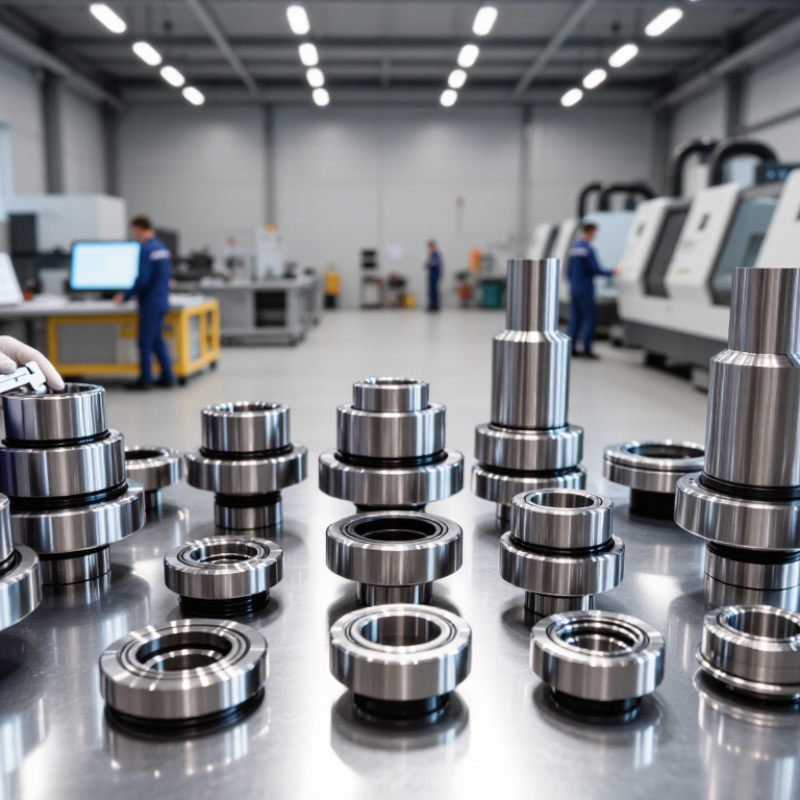
China Top Mechanical Shaft Seal Manufacturers

Understanding Mechanical Shaft Seals and Their Applications

China Top Mechanical Shaft Seal Manufacturers

Understanding Mechanical Shaft Seals and Their Applications

A mechanical shaft seal limits fluid leakage where a rotating shaft passes through a pump or mixer casing. Its faces meet with a thin fluid film between them. That film reduces friction while helping contain the process fluid. Small details matter: shaft runout, vibration, and dry running can quickly damage the sealing faces.

These seals are used in water treatment, chemical processing, food production, and other fluid-handling operations. Selection depends on pressure, temperature, fluid chemistry, and solids in the liquid. A single seal may suit clean water, while abrasive slurry often calls for different face materials and support arrangements. Double seals can be considered when leakage control or fluid containment is especially important. Tighter is not always better; an unsuitable seal can wear faster or waste energy.

The U.S. Department of Energy’s Improving Pumping System Performance sourcebook estimates that pumping systems account for nearly 20% of global electricity demand, and 25–50% of energy use in some industrial operations. This puts seal reliability in a wider efficiency context: leakage and unplanned shutdowns can affect the whole pump system. During inspection, technicians should check for residue, heat discoloration, and unusual vibration—not just visible drips. A clean drain area is not proof of a healthy seal. Seal choice should be reviewed against actual operating conditions, which are sometimes less stable than the design sheet suggests.

How to Evaluate Mechanical Shaft Seal Manufacturers in China

How to Evaluate Mechanical Shaft Seal Manufacturers in China

A capable mechanical shaft seal manufacturer should explain how its design matches your pump, fluid, pressure, temperature, and operating speed. Ask for drawings, material specifications, dimensional inspection records, and test procedures. Small details matter. Check whether face materials and elastomers are selected for the actual process fluid, not just a standard catalog example. For critical duties, request evidence of pressure testing, leakage checks, and batch traceability. ISO 21049, also published as API 682, provides a useful reference for pump sealing systems; ask which requirements the proposed design follows.

Manufacturing quality needs observable evidence. Review machining tolerances, surface finish controls, inspection equipment, and corrective-action records. A polished brochure is not proof. The U.S. Department of Energy’s Improving Pumping System Performance sourcebook reports that pumping systems can consume 25–50% of energy in some industrial facilities. That figure describes the whole pumping system, not savings attributable to a seal, but it underlines why reliability and leakage control deserve scrutiny. Ask for references from comparable services, and verify whether reported operating hours include maintenance interruptions. Ask for proof. A factory visit can reveal practical gaps, such as inconsistent labeling or incomplete test records. Those are not automatic deal-breakers, but they deserve clear answers before qualification.

China Top Mechanical Shaft Seal Manufacturers - How to Evaluate Mechanical Shaft Seal Manufacturers in China

Use this framework to compare suppliers against your application requirements. The suggested weights are an evaluation tool, not a ranking or a claim about any manufacturer.

Evaluation Dimension Suggested Weight What to Evaluate Evidence to Request Practical Assessment
Application and engineering capability 15% Whether the supplier can interpret the pump or equipment type, process fluid, operating conditions, seal arrangement, and installation constraints. Completed technical questionnaire, application review, dimensional drawing, and written confirmation of assumptions and limitations. Check that the proposed design matches the actual duty rather than relying only on a general product description.
Operating envelope 15% Documented limits and recommendations for pressure, temperature, speed, fluid properties, and start-up or upset conditions relevant to the application. Product data sheet showing applicable limits, operating conditions, and any required flush, quench, or cooling arrangement. Compare the documented limits with the full operating range, including credible transients—not just normal running conditions.
Materials and fluid compatibility 12% Suitability of face materials, elastomers, springs, and metal parts for the fluid, temperature, pressure, and potential corrosion or abrasion. Bill of materials, material specifications, compatibility guidance, and material certificates where required by the purchase specification. Confirm the exact material grades and elastomer compounds offered; do not treat a generic material family as proof of compatibility.
Applicable standards and design references 12% Whether the supplier can identify and meet the standards required for the specific equipment and industry. Written standards matrix, drawings, and technical documentation identifying the applicable standard and edition. API 682 and ISO 21049 address pump shaft sealing systems for petroleum, petrochemical, and natural gas industries. Confirm applicability to the project; these standards are not automatically required for every seal application.
Testing and acceptance criteria 12% How the supplier verifies dimensions, materials, assembly quality, and any performance requirements specified for the order. Inspection and test plan, test procedures, sample reports, acceptance criteria, and records tied to the order or production lot. Ensure the proposed tests and acceptance limits are agreed before production. A test report is meaningful only when its scope and criteria are clear.
Quality management 10% Documented controls for purchasing, production, inspection, nonconformities, corrective actions, and document control. Current quality-management-system certificate, certificate scope and validity, audit information, and relevant quality procedures. Verify the certificate with its issuing body where possible. ISO 9001 certification concerns a quality-management system; it does not by itself certify a particular seal design or guarantee product performance.
Traceability and change control 8% Ability to link supplied parts and records to a production lot, and to control changes to materials, design, or manufacturing processes. Sample serial or lot records, inspection records, material documents, and written change-notification procedures. Check that the traceability level matches the contract, industry, and criticality of the application.
Manufacturing and inspection capability 6% Whether the production and inspection processes support the required dimensions, surface finishes, tolerances, and repeatability. Process overview, equipment and inspection capability list, calibration records, and examples of inspection reports. Focus on capabilities relevant to the ordered design rather than the size of the factory or the number of machines alone.
Customization and technical communication 4% Ability to review drawings, clarify interfaces, respond to technical questions, and document approved deviations or custom designs. Drawing review process, revision-controlled documents, technical response records, and documented approval workflow. Evaluate response accuracy and clarity as well as response speed.
Delivery and order planning 3% How the supplier confirms production schedules, communicates delays, and prepares export or shipping documents when applicable. Written lead-time confirmation, order milestones, packaging details, and sample shipping-document checklist. Compare confirmed schedules and communication practices; do not rely solely on an unverified standard lead-time statement.
After-sales and problem resolution 3% Availability of installation guidance, troubleshooting support, warranty terms, and a documented process for investigating failures. Warranty conditions, installation instructions, service-contact process, and sample corrective-action or failure-analysis report. Confirm responsibilities, response channels, and any exclusions before placing an order.
Total suggested weighting 100% Adjust the weighting to reflect the application, industry requirements, operating risk, and purchasing priorities.

Optional scoring method: Score each dimension from 0 to 5, where 0 means no acceptable evidence and 5 means the requirements are fully supported by verified evidence. Calculate weighted points as: dimension weight × score ÷ 5. Compare suppliers only after confirming that each proposal is based on the same operating conditions and scope.

Leading Mechanical Shaft Seal Manufacturers in China

Leading Mechanical Shaft Seal Manufacturers in China serve pump, compressor, and mixer makers with standard and application-specific sealing solutions. Their capabilities may include precision lapping, controlled spring production, and assembly in clean work areas. These details matter: uneven seal faces or incorrect spring loads can cause leakage, heat, and early wear. Ask manufacturers about material options, such as carbon, silicon carbide, and elastomers suited to the fluid and operating temperature. A capable supplier should explain its choices, not just quote a price. Request inspection records and dimensional tolerances for the exact seal design.

Tips: Share shaft size, speed, pressure, temperature, and fluid details before requesting a quote. Provide a drawing or a worn sample when possible. Ask how the supplier checks face flatness and tests finished assemblies.

China has a broad manufacturing base, but quality can differ between factories and even between production runs. Review samples, communication, and process controls before committing to larger orders. Confirm that packaging protects the sealing faces during transit. No supplier is perfect; unclear specifications can also lead to poor results. Keep a record of operating conditions and any field failures, then discuss adjustments with the manufacturer. Fit matters.

Product Types, Materials, and Manufacturing Capabilities

China Top Mechanical Shaft Seal Manufacturers

Mechanical shaft seal manufacturers typically produce single, dual, and cartridge-style seals for pumps and rotating equipment. Single seals fit many standard duties. Dual seals may suit services where leakage control deserves extra attention. Cartridge designs can simplify installation by arriving as preassembled units. Fit matters.

Product selection depends on more than the equipment name. Engineers consider shaft diameter, pressure, temperature, speed, and the fluid being sealed. A seal intended for clean water may perform poorly with abrasive slurry. That distinction is easy to miss when reviewing a catalogue.

Material options often include carbon, silicon carbide, ceramic, and tungsten carbide faces, with elastomers such as EPDM, FKM, or nitrile chosen for service conditions. Metal parts may use stainless steel or other corrosion-resistant alloys. No material is best in every case. Compatibility should be checked against the actual fluid and operating range.

Manufacturing capabilities can include precision turning, face lapping, assembly, and dimensional inspection. Flat sealing faces and consistent spring loading matter in daily operation. Buyers can ask about inspection records, testing methods, and whether custom dimensions are supported. A polished datasheet is useful, but it cannot replace clear operating details; those are sometimes incomplete at the start of a project.

Quality Assurance, Customization, and Global Supply Services

For buyers comparing China’s mechanical shaft seal manufacturers, quality assurance should be visible in the production process, not just in a certificate. A reliable supplier can explain how face flatness, surface finish, spring load, and material batches are checked. Ask for inspection records tied to a specific order. Small details matter. A seal that looks correct can still leak if the faces are uneven or the elastomer does not suit the process fluid. Testing methods also vary, so buyers should clarify what each test proves.

Customization begins with operating conditions. Share shaft dimensions, pressure, temperature, speed, fluid composition, and cleaning requirements before requesting a design. Engineers can then assess face materials, secondary seals, and spring arrangements. A sample fitted to a real pump often reveals problems that drawings miss. That takes time. It is tempting to change several specifications at once, but doing so can make test results harder to interpret. One adjustment at a time is usually more useful.

Global supply service involves more than shipping a box. Confirm lead times, packaging, spare-part availability, and how technical questions will be handled across time zones. Clear drawings and revision records reduce confusion when a replacement is needed months later. Export schedules can shift, and no supplier can promise every delivery will be effortless. Buyers should plan reasonable stock for critical equipment and review that choice against actual maintenance data. The right buffer is not always obvious.