What is Valve Guide Customized and How Does It Work?
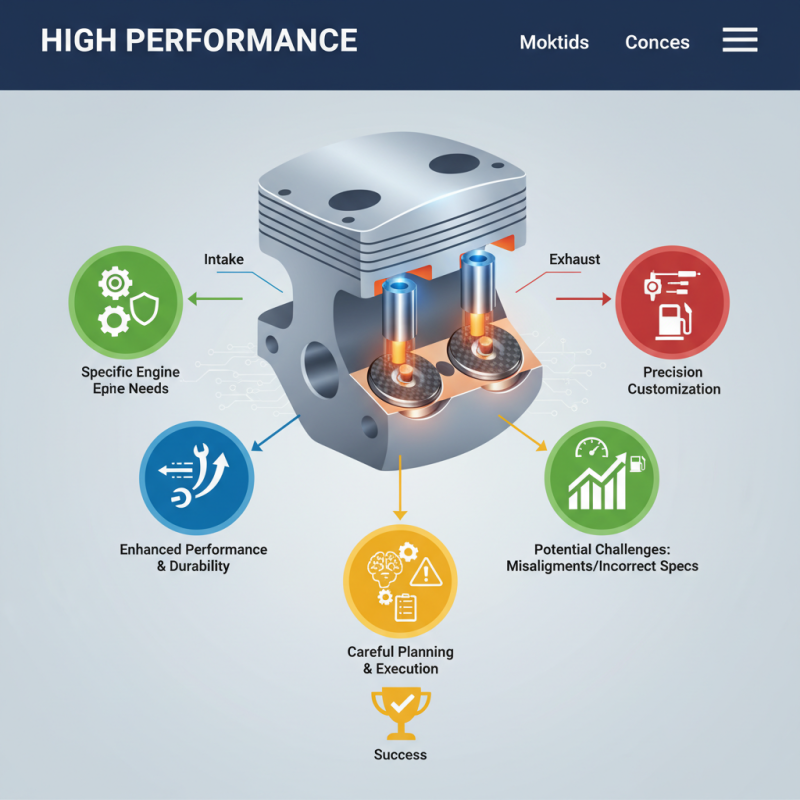
In the realm of automotive engineering, "Valve Guide Customized" is gaining significance. This concept involves tailoring valve guides to specific engine needs. Customization enhances performance and durability.
Every engine has unique requirements. Standard parts may not suffice; customization ensures a perfect fit. It often leads to improved flow and efficiency. However, creating customized valve guides can be complex. Precision is essential; even minor errors can lead to major issues.
Engine builders and enthusiasts appreciate the nuances of customization. The right valve guide can make a substantial impact. Yet, it is essential to address potential challenges. Misalignments or incorrect specifications may lead to performance setbacks. Careful planning and execution are vital to success in valve guide customization.
What is a Valve Guide and Its Importance in Engine Performance?
A valve guide is a crucial component of an engine, playing an essential role in engine performance. It helps maintain proper alignment of the valve and limits side movement. Good alignment ensures optimal sealing of the combustion chamber. This precision helps to improve engine efficiency and reduces emissions, which is vital for modern engines.
According to industry reports, misalignment can result in a power loss of up to 15%. This highlights the importance of valve guides. If they wear out, you'll face problems like reduced performance, increased oil consumption, and even valve damage. Such issues can lead to costly repairs. Monitoring the wear of valve guides is essential for overall engine health.
Tips: Regular inspections can help detect valve guide wear early. Replace them when you notice compression issues. Don’t ignore strange noises; they might signal a problem. Proper maintenance can extend the life of your engine components. Ignoring valve guide issues may result in significant performance drops over time.
Understanding the Design and Materials Used in Customized Valve Guides
Customized valve guides play a crucial role in engine performance. They ensure proper alignment and support for the valve stems. These components are not one-size-fits-all. Instead, they are tailored using specific designs and materials. Common materials include bronze, steel, and aluminum. Each material offers unique benefits, like heat resistance or weight reduction.
When designing a custom valve guide, engineers consider various factors. Engine type, expected RPMs, and even the intended fuel type matter. The guide's diameter impacts oil flow and stem fit. A precise fit is key to preventing excessive wear. Poorly designed guides can lead to engine knock and shortened lifespan.
Tips: Always consult with professionals for custom solutions. This can save you time and money. Remember, trial and error may occur during the customization process. Don't hesitate to ask for adjustments if issues arise. A small change can significantly impact performance.
What is Valve Guide Customized and How Does It Work?
| Dimension | Description | Material | Application |
| Outer Diameter | The diameter of the valve guide that fits into the cylinder head. | Cast Iron | Used in standard combustion engines. |
| Inner Diameter | The size of the hole that guides the valve stem. | Bronze | Used in performance engines for low friction. |
| Height | The vertical length of the valve guide. | Aluminum Alloy | Utilized in lightweight applications. |
| Thickness | The wall thickness of the valve guide. | High-Carbon Steel | Preferred for high-stress environments. |
| Finish | Surface treatment for reduced wear. | Nitrided Surface | Extends the life of the guide. |
How Customized Valve Guides Improve Engine Efficiency and Reliability
Customized valve guides play a vital role in enhancing engine efficiency and reliability. These components serve to position the valves accurately. When tailored to specific engine profiles, they reduce friction and improve airflow. As a result, the engine operates more smoothly and at optimal performance.
One crucial aspect is the fit of the valve guide. A poorly fitted guide can lead to increased wear and tear. This could cause misalignments, impacting the valve's movement. Engine performance may degrade over time. Therefore, ensuring a precise match is key for longevity and efficiency.
Tips: Always consider the material used for valve guides. Different materials can affect heat dissipation and wear resistance. Choosing the right one can significantly enhance engine life. Regular inspection of valve guides can also prevent costly repairs. Keep an eye on any signs of wear or irregular noise before they escalate.
The Manufacturing Process of Customized Valve Guides: A Step-by-Step Guide
Customized valve guides play a crucial role in engine performance. The manufacturing process begins with material selection. Common materials include bronze and aluminum alloys, known for their durability and resistance to wear. Precision is vital here. Reports indicate that even a slight deviation can reduce engine efficiency by 5-10%.
The next step involves machining the valve guides. Advanced CNC machines create precise dimensions. Tolerances are often within 0.001 inches. This accuracy impacts the engine's airflow and overall performance. However, not all manufacturers achieve this level. Some skip essential quality checks, leading to subpar end products.
Finishing processes include honing and polishing. This enhances the surface quality and reduces friction. Industry data suggests that well-finished valve guides can increase engine life by up to 15%. Despite these benefits, some manufacturers overlook this final stage. Inconsistency remains a challenge in the industry, highlighting the need for improved standards.
Key Metrics for Evaluating the Performance of Customized Valve Guides
Customized valve guides play a crucial role in enhancing engine performance. They control the alignment and movement of valve stems, affecting the overall efficiency of the combustion process. According to industry reports, properly designed valve guides can improve engine durability by up to 15%. This figure emphasizes the need for precision in customization.
Key metrics to evaluate customized valve guides include wear resistance, thermal stability, and dimensional accuracy. Wear resistance is vital; poor materials can lead to premature failure. Thermal stability impacts performance under varying temperatures, crucial for high-performance engines. A study indicated that customized guides with enhanced thermal properties can withstand over 250°C without degradation.
Dimensional accuracy ensures proper fit within the engine. Misalignment can cause increased wear and tear, leading to costly repairs. Engineers suggest tolerances as tight as 0.001 inches for optimal function. However, achieving such precision necessitates advanced manufacturing techniques. A balance between performance needs and the capabilities of current technology remains a topic for ongoing discussion in the industry.