Why Choose Aluminum Extrusion for Your Manufacturing Needs?
Aluminum Extrusion is a vital process in modern manufacturing. It provides unique advantages for various industries. As John Smith, an expert in aluminum applications, once said, "Aluminum extrusion offers flexibility and strength that other materials simply cannot match." This statement underlines the importance of this manufacturing technique.
Many manufacturers are shifting towards aluminum extrusion. It allows for lightweight designs without sacrificing durability. This combination is essential for sectors like automotive and aerospace. Custom shapes can be easily created, meeting specific needs. However, some companies struggle with the initial investment. They often overlook the long-term benefits.
Choosing aluminum extrusion requires careful consideration. It is not just about the product but also about the process. Successful implementation means optimizing costs while enhancing quality. As industries evolve, so must their materials. Reflecting on these factors ensures that manufacturers make informed choices. Embracing aluminum extrusion can lead to significant advantages.
Understanding Aluminum Extrusion: A Key Manufacturing Process
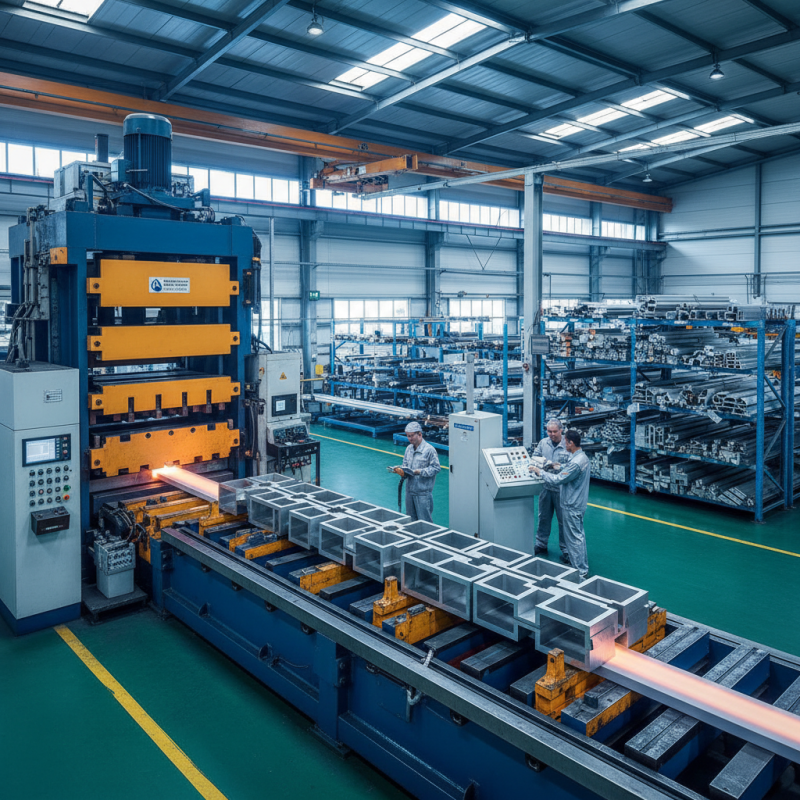
Aluminum extrusion is a vital manufacturing process that shapes aluminum into specific profiles. This method involves forcing heated aluminum through a die to create desired forms. It allows for high precision and minimal waste. Key benefits include versatility, lightweight design, and corrosion resistance. Industries ranging from automotive to construction increasingly rely on this technique.
Tips: When exploring aluminum extrusion, consider the required specifications. Different alloys offer various strength and flexibility. Assess your project needs carefully.
This process also allows complex shapes not easily achievable with other methods. However, initial tooling costs can be high. It’s essential to weigh these costs against long-term benefits. Proper planning can save time and resources.
Tips: Collaborate with skilled engineers to design your profiles. Their expertise can enhance functionality and efficiency. Always consider the finishing process, as it can impact the final product.
Advantages of Aluminum Extrusion in Diverse Industries
Aluminum extrusion offers numerous advantages across various industries. Its lightweight nature significantly reduces transportation costs. This is essential for automotive and aerospace applications, where every ounce matters. The process allows for complex shapes, enabling designers to create innovative solutions that meet specific requirements.
In construction, aluminum extrusion provides durable and corrosion-resistant profiles. These qualities enhance the lifespan of architectural elements, making them a preferred choice for windows and facades. However, the initial cost of extrusion tooling can be high. This might deter some manufacturers from fully embracing aluminum. Despite this, the long-term benefits often outweigh the initial investment.
Electronics manufacturers also benefit from aluminum's thermal conductivity. Extruded aluminum can be crafted into heat sinks, effectively managing device temperatures. Yet, the precision required in extrusion can lead to variability in quality. Attention to detail is crucial during production to avoid defects. This ongoing challenge requires manufacturers to continuously refine their processes for optimal results.
Advantages of Aluminum Extrusion in Diverse Industries
Cost-Effectiveness and Efficiency of Aluminum Extrusion
Aluminum extrusion stands out as a cost-effective solution in manufacturing. According to a recent industry report, aluminum's lightweight nature can reduce material costs by as much as 30%. This efficiency becomes significant when considering large-scale projects. The extrusion process allows manufacturers to create complex shapes while minimizing waste. With up to 90% material utilization reported, businesses can save on excess scrap.
In addition, aluminum extrusion offers impressive energy efficiency. A study indicates that aluminum requires 90% less energy to process compared to other metals when used in structural applications. This low-energy footprint translates into lower operating costs. Moreover, with the increase in automation in extrusion processes, labor costs can drop by nearly 25%.
However, it is worth noting that aluminum's initial procurement costs can be higher than steel. The price volatility of aluminum may pose challenges. Manufacturers must be prepared for fluctuations in material costs. Long-term contracts may help mitigate these risks. Striking a balance between initial investment and overall savings is essential for effective budgeting.
Environmental Impact and Sustainability of Aluminum Extrusion
Aluminum extrusion offers significant advantages in terms of environmental impact and sustainability. The recycling rate of aluminum stands at about 75%, making it a highly sustainable choice. Unlike many materials, it can be recycled multiple times without losing quality. This property contributes greatly to reducing waste in manufacturing processes.
The production of aluminum also utilizes renewable energy sources in many regions. This shift lowers carbon emissions compared to traditional manufacturing processes. However, the initial mining and processing can be energy-intensive. Companies must address this to enhance their sustainability profile.
Moreover, the lightweight nature of aluminum trims transportation emissions. Efficient delivery reduces the overall carbon footprint of products. Yet, the manufacturing process must continuously evolve. There is always room for improvement in energy consumption and waste management. Emphasizing responsible sourcing and innovative recycling methods can further enhance its sustainability impact.
Why Choose Aluminum Extrusion for Your Manufacturing Needs? - Environmental Impact and Sustainability of Aluminum Extrusion
| Aspect | Details | Benefits |
| Material Source | Primarily derived from bauxite | Abundant and recyclable |
| Production Process | Extrusion minimizes waste and energy usage | Efficient and cost-effective production |
| Recyclability | End-of-life aluminum can be recycled without quality loss | Sustainable lifecycle management |
| Energy Consumption | Lower energy requirements compared to steel production | Reduced carbon footprint |
| Durability | Resistant to corrosion and wear | Long-lasting products |
| Application Range | Used in various industries including automotive, aerospace, and construction | Versatile material for multiple uses |
Applications of Aluminum Extrusion in Modern Manufacturing
Aluminum extrusion plays a vital role in modern manufacturing, with applications spanning various industries. According to a recent industry report, the global aluminum extrusion market is expected to reach $85 billion by 2027, highlighting its growing significance. Extruded aluminum is lightweight yet strong, making it ideal for sectors such as automotive, aerospace, and construction. In the automotive industry, for instance, aluminum extrusions are used for lightweight frames, contributing to improved fuel efficiency.
One of the key advantages of aluminum extrusion is its versatility in design. Manufacturers can create complex shapes while maintaining structural integrity. This adaptability is evident in the architectural field, where aluminum extrusions are used for window frames, curtain walls, and roofing systems. This trend is driven by the push for sustainable building materials that can withstand various environmental conditions.
Tips: When considering aluminum extrusion, factor in your project's specific requirements. Evaluate weight, strength, and corrosion resistance to ensure you choose the right alloy. Keep in mind that while aluminum offers many benefits, it may also require additional processing and finishing, which can add to the project's overall cost. Always assess the long-term implications of your material choices.