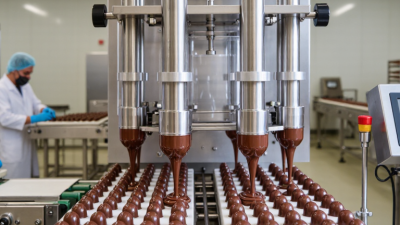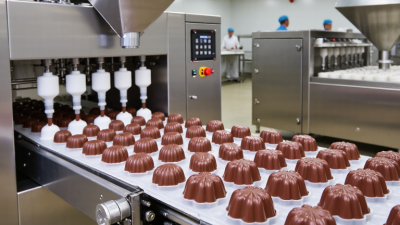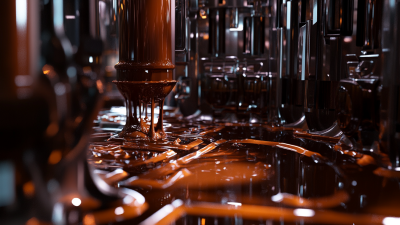
Choosing China’s top Chocolate depositing machine manufacturers requires more than comparing prices and polished factory photos. Buyers need evidence from production floors, test kitchens, and long-term customer support. A capable supplier should explain depositing accuracy, chocolate temperature control, product weight tolerance, and cleaning procedures clearly.
Chocolate technologist Stephen T. Beckett wrote, “Chocolate is a unique product, combining the properties of a solid and a liquid.” This principle matters when evaluating depositing equipment. Chocolate viscosity changes with temperature, cocoa butter content, filling structure, and production speed. A reliable machine must handle these variables without creating tails, air pockets, or uneven shapes.
The strongest Chinese manufacturers usually provide servo-driven depositing systems, adjustable nozzle plates, heated hoppers, and recipe controls. Some also support compound chocolate, cream centers, biscuits, and molded products. Ask for factory test videos, sample results, electrical specifications, and documented sanitation procedures. Better still, send your own chocolate formula for a controlled trial.
Small details reveal manufacturing experience. Watch the nozzle movement. Check the deposit weight after several hours. Inspect welds inside the hopper. Ask how quickly service engineers respond.
No ranking remains permanent.
A supplier may offer excellent hardware but weak after-sales communication. Another may provide helpful support yet lack experience with complex fillings. That is why this guide compares China’s leading Chocolate depositing machine manufacturers through practical, technical, and reliability-focused criteria. It considers machine construction, customization, production consistency, compliance documentation, spare parts, and real customer experience. Some conclusions may remain imperfect, because factory capabilities change. Careful verification is still necessary before signing a purchase agreement.
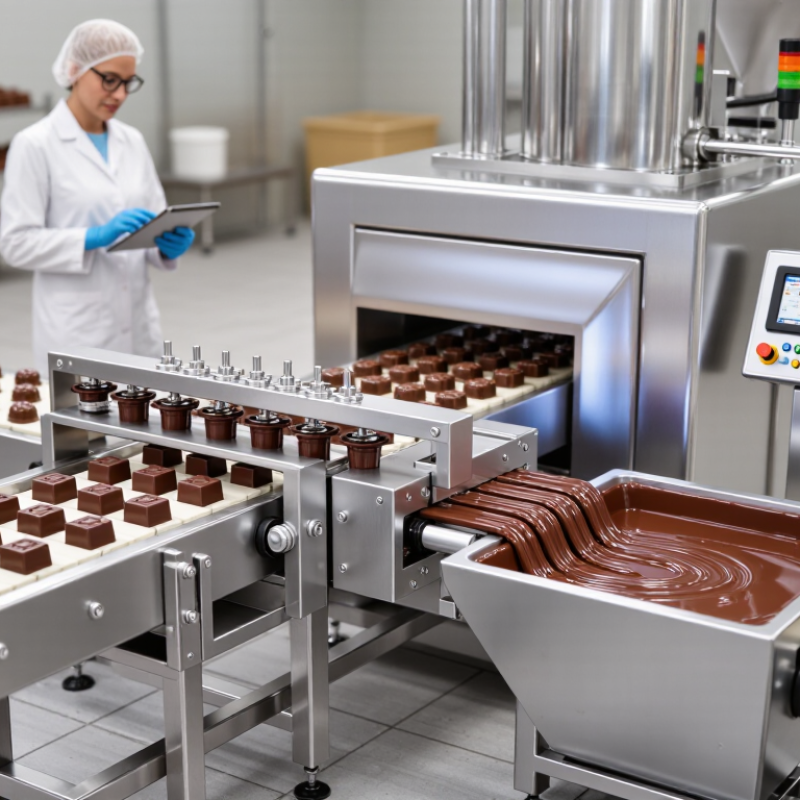
A chocolate depositing machine is a production system that portions tempered chocolate into molds, trays, or directly onto a conveyor. It uses a heated hopper, controlled valves, and depositing nozzles. The machine releases a measured amount for each piece. This improves weight consistency and reduces manual handling. In a small workshop, an operator may fill molds by hand. In larger production, automated depositing supports faster output and cleaner working conditions.
The process requires more than pressing a start button. Chocolate temperature, viscosity, mold position, and deposit speed must match the recipe. A slight temperature change can create dull surfaces, thick edges, or incomplete filling. Modern machines may include servo controls, touchscreen settings, vibration tables, and automatic mold alignment. These features help, but they cannot correct poor tempering. From practical production experience, regular cleaning and calibration remain essential. Operators should record batch temperatures and piece weights. Mistakes still happen, especially during product changes. That is why careful testing matters before full production begins.
Tips: Choose a machine according to chocolate type, mold size, daily capacity, and required accuracy. Check whether the hopper maintains stable heat. Ask for clear maintenance instructions and operator training. Test several deposit weights before approving a final setting. A machine that runs quickly may still waste chocolate if its control system is poorly matched to your process.
China’s leading chocolate depositing machines focus on accurate portion control, stable heating, and flexible production. Servo-driven pistons can place equal chocolate weights into molds, even during long production runs. This matters when a factory produces bars, filled pralines, or small seasonal pieces.
Temperature control is equally important. A well-designed hopper keeps chocolate within a narrow working range, while separate heating zones reduce viscosity changes. Operators can adjust deposit speed, volume, and nozzle timing through a clear control panel. Quick-change nozzles also reduce cleaning delays. Small details matter.
During production trials, stainless steel contact parts are easier to inspect and sanitize. Smooth surfaces leave fewer chocolate residues around valves and corners. Many machines include automatic mold indexing, which improves alignment and reduces manual handling. However, performance depends on proper tempering and mold temperature. A depositing machine cannot correct every upstream mistake.
Reliable suppliers usually provide test runs, maintenance guidance, and documented electrical specifications. Ask for weight-tolerance data under real operating conditions, not only showroom samples.
Noise level, compressed-air use, and access to replacement seals deserve attention too. I have seen machines appear precise at low speed, then drift slightly at higher output. That gap needs honest testing. A practical buyer should examine cleaning time, operator training, and service response before selecting equipment.
China Top Chocolate Depositing Machine Manufacturers?
Top Chocolate Depositing Machine Manufacturers in China
China has become a major sourcing base for chocolate depositing equipment. Manufacturers commonly build systems for bars, pralines, shells, and filled pieces. A reliable machine should control chocolate temperature closely. Even a small fluctuation can affect viscosity, shine, and weight accuracy.
Experienced manufacturers usually provide servo-driven depositing heads, stainless-steel contact parts, heated hoppers, and programmable recipes. Buyers should examine deposit tolerance, nozzle design, conveyor stability, and cleaning access. Food-contact materials should have clear documentation. Factory testing is also important. Ask for sample production using your chocolate formula, not only water or substitute materials.
Technical support can separate a capable manufacturer from an ordinary supplier. Check installation guidance, spare-parts availability, electrical standards, and response procedures. Production speed looks impressive on paper, but it may reduce accuracy with thicker fillings. This is often overlooked. A factory visit, live video inspection, or third-party audit can reveal welding quality, cable protection, and workshop discipline. Those details matter.
Not every manufacturer fits every application. Some focus on compact machines for small confectionery workshops. Others design automated lines with cooling tunnels and packaging connections. Buyers should compare actual output, footprint, changeover time, and operator training. A polished brochure is not enough. Product trials may expose limitations that specifications hide. Careful evaluation remains necessary, especially when recipes change across seasons.
| Evaluation Dimension | Typical Industry Data | Why It Matters | Recommended Verification Point |
|---|---|---|---|
| Machine configuration | Single-color, two-color, center-filled, shell-molding, and bottoming configurations are commonly available. | The configuration determines the types of chocolate products that can be produced. | Request a product sample made with the intended chocolate recipe, mold, and filling. |
| Depositing accuracy | Industrial depositing systems commonly use servo-driven or precision piston systems to control portion volume and weight. | Consistent depositing reduces product-weight variation and material waste. | Check the guaranteed weight tolerance under actual production conditions rather than relying only on no-load tests. |
| Heating and temperature control | Chocolate depositing lines generally use heated hoppers, heated manifolds, and independently controlled heating zones. | Stable temperature control helps maintain chocolate viscosity and tempering quality. | Confirm the number of temperature zones, sensor type, control accuracy, and insulation design. |
| Capacity range | Capacity varies significantly by mold size, product weight, number of depositing heads, and conveyor speed; published figures should be treated as application-specific. | A nominal output figure may not represent the actual output of a specific product. | Compare output in kilograms per hour using the buyer’s mold, recipe, piece weight, and working hours. |
| Chocolate compatibility | Machines may be designed for dark, milk, white, compound, or filled chocolate, subject to viscosity and temperature requirements. | Different formulations require different heating, pumping, and depositing parameters. | Provide the supplier with the recipe, cocoa-butter content, viscosity data, and filling characteristics. |
| Mold and product flexibility | Interchangeable molds and adjustable depositing programs are commonly used for bars, pralines, pieces, and molded confectionery. | Flexible tooling can reduce future equipment investment when the product range expands. | Verify mold dimensions, changeover time, tooling cost, and the maximum number of supported recipes. |
| Automation and controls | PLC-based controls, touch-screen interfaces, recipe storage, variable-speed drives, and alarm records are standard features in modern lines. | Automation improves repeatability, traceability, and operator control. | Check language options, remote troubleshooting capability, data export, and availability of electrical documentation. |
| Hygienic design | Food-contact parts are commonly manufactured from stainless steel, with removable components and smooth surfaces for cleaning. | Hygienic construction supports food safety and reduces cleaning downtime. | Confirm material grades, weld finish, drainage design, cleaning procedure, and access to product-contact areas. |
| Electrical requirements | Common industrial configurations use three-phase power, but voltage and frequency must be matched to the destination market. | Incorrect electrical specifications can delay installation and commissioning. | Confirm rated voltage, frequency, total connected load, plug standards, and control-panel requirements before ordering. |
| Compliance documentation | Export projects may require documents such as a declaration of conformity, electrical diagrams, risk assessment, and food-contact material information. | Documentation supports customs clearance, installation, audits, and regulatory review. | Match the documentation package to the importing country’s machinery and food-contact regulations. |
| After-sales service | Support may include installation guidance, operator training, spare-parts supply, video assistance, and on-site service subject to contract terms. | Fast technical support helps reduce production interruptions. | Request service response times, warranty conditions, spare-parts lead times, and escalation procedures in writing. |
| Total cost of ownership | The purchase price is only one cost component; tooling, shipping, installation, energy use, maintenance, and spare parts also affect the final cost. | A lower initial price may result in higher operating costs over the equipment lifecycle. | Compare a five-year cost model using energy consumption, labor, maintenance, tooling, and expected production volume. |
Note: The figures and specifications above describe common industry practices and evaluation criteria. Actual performance depends on machine configuration, chocolate formulation, mold design, operating conditions, and the supplier’s confirmed technical documentation.
China Top Chocolate Depositing Machine Manufacturers?
When comparing Chinese chocolate machine suppliers, do not begin with catalog claims. Begin with process evidence. Grand View Research estimated the global chocolate market at over USD 130 billion in 2023. Demand is growing, but equipment quality remains uneven.
Request a live trial using your chocolate recipe, molds, and target output. Measure depositing accuracy, temperature stability, changeover time, and product weight variation. A practical benchmark is ±1% weight variation, but your formulation may require tighter control. Check servo control, hopper insulation, nozzle design, and cooling compatibility. Ask for recorded test data, not only photographs.
Food safety documentation matters. Confirm stainless-steel grades, hygienic welds, cleaning access, and traceability of food-contact parts. ISO 22000 alignment is useful, although certification alone does not prove machine performance. The International Cocoa Organization reported global cocoa grindings near 4.9 million tonnes in the 2023/24 season. That scale increases pressure for stable, efficient processing.
Compare total ownership cost. Include installation, spare parts, training, energy use, and response time. PMMI industry research repeatedly identifies automation and labor efficiency as major packaging investment drivers. A lower quotation may therefore be misleading. Request a factory acceptance test and a written service agreement. Speak with two operating users, if possible. I would also inspect the supplier’s workshop personally; online videos can hide poor finishing. Some evaluation mistakes are unavoidable. Document them, then revise your scoring sheet before signing.
Chocolate depositors serve confectionery lines that require accurate, repeatable filling. Typical applications include molded bars, pralines, shells, buttons, biscuits, and layered snacks. Depositing systems can handle solid, filled, or mixed chocolate, depending on hopper design and temperature control.
Grand View Research valued the global chocolate market at about USD 131.7 billion in 2023. Its report expects continued growth through 2030. However, market estimates vary by product scope. This matters when calculating machine capacity. A small bakery may need 20–60 kilograms per hour, while an industrial line may require several hundred kilograms. Buying only by maximum output can create waste. Check deposit accuracy, nozzle changeover time, jacketed hopper performance, and compatibility with your recipe. Chocolate viscosity changes with temperature.
Tips: Request product trials using your actual chocolate and inclusions. Measure weight variation across at least 100 pieces. Ask for cleaning time, spare-part availability, operator training, and service response. A machine that runs quickly but cleans slowly may reduce real productivity. Energy use also deserves attention, although supplier figures often exclude heating during standby. That detail is easy to miss. Experience shows that floor space, mold dimensions, and future recipe changes should be reviewed before signing specifications. No machine fits every line perfectly.
This chart presents typical working-temperature ranges used when depositing different chocolate types. Actual settings depend on the recipe, viscosity, deposit size, cooling conditions, and machine design.